
Last spring, a Brampton family brought their eight-year-old tabby cat, Noor, into the clinic for what they described as “just a check-in.” Nothing dramatic had happened. She was eating. She wasn’t limping. She wasn’t crying out in pain. But something felt slightly off — she was sleeping more than usual, and she’d stopped jumping onto the couch the way she used to. The owners figured it was old age.
It wasn’t. Blood work that same afternoon revealed early-stage chronic kidney disease — caught at a point where dietary management and monitoring could meaningfully slow its progression. A few months later and the outcome would have looked very different.
That story is exactly why pet wellness exams matter so much, and why the signs that a pet needs preventive care are so easy to overlook. They don’t always announce themselves loudly. This guide walks through the most common warning signs — the subtle ones and the obvious ones — and explains what each one means and when to act on it.
Why Preventive Care Is Not the Same as “Waiting to See If It Gets Worse”
There’s a common assumption among pet owners that as long as an animal is eating, drinking, and moving around, a vet visit can wait. It’s an understandable assumption — animals are good at masking discomfort, and nothing feels wrong on the surface. But that instinct toward masking is precisely the reason preventive medical care exists. It’s built around what isn’t visible yet.
The benefits of health and wellness monitoring go far beyond catching the occasional infection early. Regular pet wellness exams build a documented baseline of your animal’s normal values — their resting weight, organ function markers in bloodwork, heart rate, and dental condition. When something shifts, that baseline is what makes the shift detectable. Without it, a veterinarian is comparing today’s results against a population average. With it, they’re comparing against your specific pet’s own history. That’s a fundamentally different — and more powerful — diagnostic position.
At Lacoste Animal Hospital Brampton, the approach to preventive veterinary care reflects this thinking. Rather than reacting to crises, the clinic’s wellness model is designed to catch problems during the window where intervention is still straightforward. That is prevention in health care working as it should.
The Top Signs Your Pet Is Overdue for a Wellness Exam
Some of these signs are physical. Some are behavioural. A few are simply a matter of time — your pet hasn’t been seen in over a year, and a lot can change in twelve months. Here’s what to watch for.
1. Unexplained Weight Change — in Either Direction
Weight loss or gain that doesn’t correspond to a change in diet or activity is one of the clearest signals that something physiological is happening. In cats, sudden weight loss — even when appetite seems normal or increased — can indicate hyperthyroidism or diabetes. In dogs, gradual unexplained weight gain can point to hypothyroidism or Cushing’s disease. Neither condition shows obvious external symptoms in the early stages, which is what makes them so easy to miss without bloodwork. If you’ve noticed your pet looks noticeably different than they did six months ago and you can’t explain why, that’s a reason to come in for animal health services sooner rather than later.
2. Changes in Thirst or Urination
Drinking more water than usual, or urinating more frequently, are classic signs of several conditions including diabetes mellitus, kidney disease, and adrenal disorders. In cats especially, many owners chalk excessive water intake up to the weather or the food brand. It often isn’t. Conversely, reduced urination — or straining to urinate — can indicate a urinary tract infection or, in male cats, a life-threatening urinary blockage. Any noticeable change in bathroom habits warrants a prompt check-in with your vet.
3. Persistent Bad Breath
Pet breath is never going to be mistaken for a bouquet of flowers, but genuinely foul or unusual odour is a diagnostic signal. A sweet or fruity smell can indicate diabetes. A urine-like or ammonia odour in a cat’s breath often reflects compromised kidney function. The most common cause, though, is periodontal disease — and this one matters far beyond the mouth. Bacteria from infected gum tissue can enter the bloodstream and affect the heart, kidneys, and liver over time. Dental health is a core component of preventive care for both dogs and cats, and it’s assessed during every wellness exam at the clinic.
4. Lethargy or Reduced Activity That Lasts More Than a Few Days
Every pet has an off day. But when reduced energy or withdrawal from normal activities persists for a week or more, it’s worth taking seriously. Lethargy is one of the most non-specific signs in veterinary medicine — it can accompany everything from anaemia and infection to pain, heart disease, and cancer. The challenge is that it’s also the sign most often dismissed as “just getting older.” Age-related slowing is real, but it should be confirmed, not assumed. A physical exam paired with basic bloodwork can rule out a long list of treatable conditions very quickly.
5. Scratching, Licking, or Skin and Coat Changes
Excessive scratching or persistent licking at the same spot usually means something is bothering the animal there — whether that’s fleas, an allergy, a skin infection, or early arthritis in a joint. Changes in coat quality — dullness, thinning, or patches of hair loss — can also reflect nutritional deficiencies, hormonal imbalances, or parasitic infestations. Flea and tick prevention for dogs and flea and tick prevention for cats are an integral part of preventative health services at Lacoste, because once a flea infestation takes hold in a household, managing it is significantly more involved than preventing it in the first place. Year-round parasite control is the standard recommendation — not just for warm months.
6. Digestive Problems That Come and Go
Occasional vomiting or a soft stool here and there may not be cause for concern. But when digestive upsets happen regularly — a few times a month, or in patterns tied to specific foods or situations — that’s a signal worth investigating. Intermittent vomiting in cats, for example, is often attributed to hairballs but can reflect inflammatory bowel disease or food intolerance. Recurring loose stool in dogs can indicate intestinal parasites, dysbiosis, or a chronic digestive condition. Fecal testing during a pet wellness exam can identify parasitic causes immediately, and bloodwork can screen for organ involvement in more complex cases. The in-house diagnostics at Lacoste mean these tests produce same-day results rather than a multi-day wait.
7. Stiffness, Limping, or Difficulty with Movement
Mobility changes — especially in the morning after rest, or when getting up from lying down — are a hallmark of early osteoarthritis. This is one of the most undertreated conditions in pets because owners often assume their dog or cat is “just ageing” and there’s nothing to be done. The reality is that early intervention with appropriate pain management, joint supplements, weight monitoring, and modified activity can meaningfully preserve comfort and quality of life for years. In younger pets, a sudden limp that doesn’t resolve in 24–48 hours warrants evaluation regardless of whether a specific injury was observed. Dogs especially will often bear weight on an injured limb rather than signal pain obviously.
8. It’s Been More Than a Year Since the Last Exam
This one isn’t a symptom — it’s a schedule. For adult pets in good health, a once-yearly preventive medical care visit is the baseline standard. For senior pets (generally 7+ years), twice yearly is the recommended frequency because age-related changes can develop and progress quickly. A year in a pet’s life spans a disproportionate amount of biological time compared to a year in a human life. Waiting until something appears wrong means waiting until the condition has already progressed past its most manageable stage. Booking a wellness visit proactively — even when your pet seems perfectly fine — is the single most effective thing you can do for their long-term health.
Flea and Tick Prevention: The Parasite Problem People Keep Underestimating
It’s worth spending a moment on this one specifically, because the consequences of skipping parasite prevention are frequently underestimated by well-meaning pet owners.
Fleas aren’t just an inconvenience. For pets with flea allergy dermatitis — a condition caused by hypersensitivity to flea saliva — a single flea bite can trigger a significant allergic reaction leading to intense itching, skin trauma, and secondary bacterial infections. Fleas also serve as intermediate hosts for tapeworms, meaning an infested pet is at risk of intestinal parasites as well. And because fleas spend most of their lifecycle in the environment rather than on the pet, by the time you notice one flea on your dog, the carpet, furniture, and bedding in your home may already contain eggs and larvae.
Ticks present a different but equally serious concern. In Ontario, the black-legged tick (deer tick) is a known carrier of Lyme disease, and its range in the province has expanded considerably in recent years. A tick attached for 24–36 hours can transmit the Lyme bacterium. The problem is that tick attachment often goes unnoticed — especially in thick-coated breeds. Year-round flea and tick prevention for dogs and flea and tick prevention for cats that spend any time outdoors is considered standard prevention in health care practice for companion animals in this region.
At your pet’s wellness visit, the team at Lacoste Animal Hospital Brampton will assess your pet’s specific lifestyle and risk exposure and recommend an appropriate parasite control protocol — one that fits how your animal actually lives, rather than a blanket prescription.
What Complete Preventive Care Looks Like at Lacoste Animal Hospital
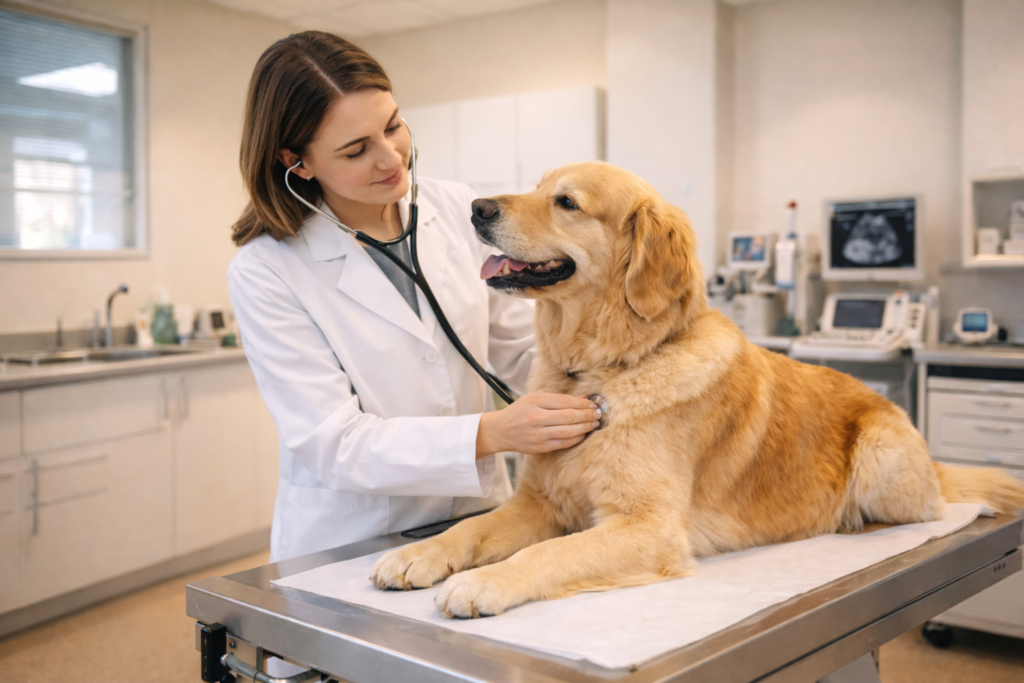
When you bring a pet in for a wellness visit at Lacoste, the examination goes considerably deeper than a quick listen with a stethoscope. The goal of complete care for pets is to gather a full clinical picture — every system, every parameter — so that any deviation from your pet’s established normal stands out clearly.
The physical examination covers the eyes, ears, oral cavity and teeth, lymph nodes, heart and lung sounds, abdominal palpation, skin and coat, musculoskeletal system, and body condition scoring. This is followed by a conversation about recent changes at home, diet, activity levels, and any behavioural observations you’ve made. Those contextual details matter — a veterinarian who knows that your cat has been drinking more water and hiding under the bed has a different diagnostic picture than one who only sees the results on paper.
When blood work or urinalysis is indicated, Lacoste’s in-house diagnostic laboratory processes the most common panels on-site, meaning results are available before you leave the clinic in many cases. For anything requiring specialist analysis, the clinic works with trusted external laboratories including IDEXX and Antech. The post on a day in Lacoste’s diagnostic centre provides a more detailed look at how that workflow operates.
Vaccination status is reviewed at every visit, and recommendations are tailored to your pet’s specific risk factors rather than applied uniformly across all patients. Parasite prevention protocols are discussed and adjusted as needed. Dental health is assessed and, when professional cleaning is indicated, that conversation happens here rather than being deferred until the condition has worsened.
The clinic is open six days a week with extended evening hours — Monday 10 AM to 9 PM, Tuesday 9 AM to 7 PM, Thursday 9 AM to 7 PM, Friday through Sunday 12 PM to 10 PM (closed Wednesday) — meaning scheduling a pet wellness exam around work and family life is genuinely feasible. Reach the team at +1 (905) 913-8888 or petcare@lacosteanimalhospital.ca. The clinic is located at 117, 50 Lacoste Blvd, Brampton, ON L6P 3Z8.
For further context on why this preventive philosophy is central to the clinic’s identity, the post on why Lacoste is Brampton’s trusted clinic for preventive care goes into substantial detail on the clinical reasoning behind that approach.
Frequently Asked Questions
-
How do I know if my pet’s behaviour change is a medical issue or just personality?
Persistent changes are the key signal. Every animal has good days and bad days. A dog that doesn’t want to play on one rainy afternoon is probably just having an off day. A dog that has been reluctant to exercise, slower on walks, or withdrawing from interaction consistently over two to three weeks — that warrants a clinical evaluation. When in doubt, a conversation with the veterinary team at Lacoste can help you determine whether what you’re observing is within normal range or worth investigating further.
-
Are pet wellness exams necessary for indoor-only cats?
Yes, and indoor cats are actually frequently underserved when it comes to preventive care because owners assume that limited outdoor exposure means limited risk. Indoor cats are fully exposed to age-related disease processes — kidney disease, hyperthyroidism, diabetes, dental disease, and obesity among them. Wellness visits for indoor cats are just as important as for outdoor ones; the risk profile differs but the need for regular monitoring remains the same.
-
What is the difference between a wellness exam and a sick visit?
A wellness exam is scheduled proactively when the pet appears healthy. The goal is to establish baselines, detect subclinical disease, update preventive protocols, and educate the owner. A sick visit is scheduled in response to a specific concern — a symptom, an injury, or an observed change. Both are important; one does not replace the other. Importantly, many conditions that require sick visits could have been detected earlier through routine wellness screening.
-
My dog had vaccines recently — does he still need a full wellness exam?
Vaccinations are one component of a wellness visit, but not a substitute for the full physical examination. A vet tech administering vaccines alone does not perform the head-to-tail assessment, bloodwork review, dental evaluation, and body condition scoring that constitute a completepreventive medical carevisit. If your pet received vaccines at a vaccine-only clinic or mobile event, it’s still worth scheduling a full exam separately.
-
How far in advance should I book a wellness visit?
Lacoste Animal Hospital recommends not waiting until a concern arises to schedule preventive care. Booking one to two weeks ahead is generally sufficient for wellness appointments given the extended hours the clinic maintains. For more urgent situations, the team accommodates same-day urgent care visits without a required appointment during operating hours. Call +1 (905) 913-8888 to check availability.
The Longer the Gap Between Visits, the Higher the Stakes
Preventive care doesn’t always deliver dramatic, visible results. That’s somewhat the point — when it works well, nothing dramatic happens. The kidney disease gets caught before it causes a crisis. The ear infection gets treated before it reaches the middle ear. The dental abscess gets addressed before the tooth root becomes involved. The flea prevention gets started before the infestation takes hold.
None of those outcomes make for an exciting story. But they’re the reason pet owners who stay consistent with pet wellness exams so often describe their animals as living longer, more comfortable lives than they expected. Prevention in health care is, by design, invisible when it’s successful.
If any of the signs in this guide sound familiar — or if your pet simply hasn’t been seen in over a year — the team at Lacoste Animal Hospital Brampton is a straightforward call or email away. You can learn more about the services and the team in our post on local veterinary services at Lacoste, or reach out directly to schedule a visit.
Lacoste Animal Hospital Brampton
117, 50 Lacoste Blvd, Brampton, ON L6P 3Z8
Phone: +1 (905) 913-8888
Email: petcare@lacosteanimalhospital.ca
Hours: Mon 10 AM–9 PM | Tue 9 AM–7 PM | Wed Closed | Thu 9 AM–7 PM | Fri–Sun 12 PM–10 PM