
Pet Medical Imaging and Radiology in Brampton
When your pet needs answers that a physical exam alone cannot provide, medical imaging reveals what is happening beneath the surface. Lacoste Animal Hospital Brampton offers in-house digital radiography and ultrasound technology that produces high-resolution images within minutes — allowing our veterinarians to diagnose fractures, organ abnormalities, foreign body obstructions, and internal conditions with precision and speed. Pet owners looking for veterinary X-rays near me or an ultrasound clinic in Brampton with same-day imaging will find advanced diagnostic capabilities right here at our clinic.
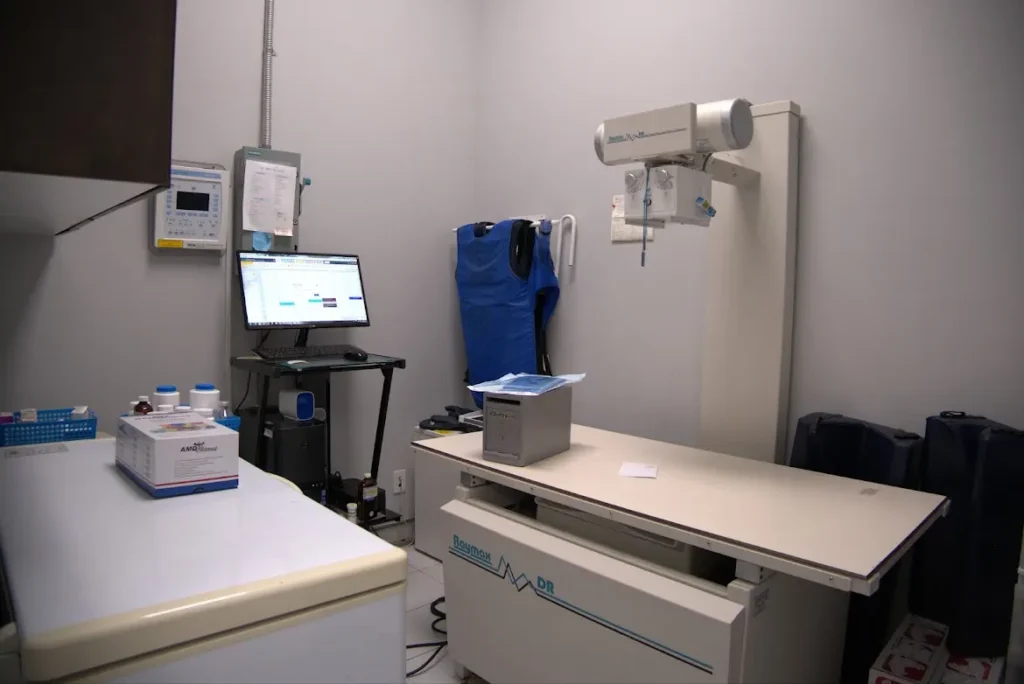
Digital Radiography (X-Rays)
Our clinic uses digital radiography rather than traditional film-based X-rays. Digital systems capture images instantly, produce significantly higher resolution, and expose your pet to less radiation per image compared to older technology. Once captured, images can be enhanced, magnified, and adjusted on screen so our veterinarians can examine subtle details that might be missed on conventional film.
What X-Rays Can Reveal
Radiographs are one of the most versatile diagnostic tools in veterinary medicine. They allow our team to evaluate bone fractures, joint alignment, and signs of arthritis or degenerative disease, identify foreign objects that pets have swallowed, assess heart size and shape along with lung and airway conditions, examine the size and position of abdominal organs including liver, kidneys, spleen, and bladder, detect bladder stones, intestinal gas patterns, and signs of obstruction, and confirm pregnancy and estimate litter size.
X-rays are often the first imaging step when a pet presents with trauma, persistent lameness, breathing difficulties, abdominal pain, or suspected ingestion of a foreign object.
Ultrasound Imaging
Ultrasound uses sound waves to create real-time images of soft tissues and internal organs without any radiation exposure. It is entirely non-invasive and painless, making it well-suited for evaluating patients who may already be stressed or uncomfortable.
When Ultrasound Is Used
Our veterinarians use ultrasound to examine the internal structure of abdominal organs — including the liver, kidneys, spleen, bladder, gastrointestinal tract, and reproductive organs — in far greater detail than radiographs alone can provide. Ultrasound is particularly valuable for identifying fluid accumulation in the abdomen or chest, evaluating masses and tumors for size and internal characteristics, guiding fine-needle aspirates for tissue sampling, monitoring cardiac structure and function in patients with suspected heart disease, and assessing urinary tract conditions and bladder wall abnormalities.
In many cases, X-rays and ultrasound are used together to provide complementary information. Radiographs show bone and overall organ position, while ultrasound reveals soft tissue texture, blood flow, and real-time organ movement.
Why In-House Imaging Matters
Having imaging equipment on-site means results are available immediately — not after a referral, a separate appointment, and days of waiting. For a pet in pain or experiencing an acute illness, that speed translates directly into faster treatment and relief.
Our veterinarians interpret every image during your visit, so you leave with a clear understanding of your pet’s condition and a defined treatment plan. If imaging reveals a condition requiring surgical intervention, our team can coordinate next steps without delay. If additional diagnostic bloodwork is needed to complete the picture, that testing happens on-site during the same appointment.
Conditions Diagnosed Through Medical Imaging
Medical imaging plays a central role in diagnosing a wide range of conditions in dogs and cats. Common findings include bone fractures and dislocations from trauma or falls, arthritis and degenerative joint disease in aging pets, foreign body ingestion requiring identification and localization, heart enlargement and pulmonary conditions, abdominal masses, tumors, and organ enlargement, bladder stones and urinary tract abnormalities, gastrointestinal obstructions and motility disorders, pregnancy confirmation and fetal monitoring, and chest conditions including pneumonia, pleural effusion, and airway disease.
Early identification of these conditions through imaging gives our veterinarians the information needed to recommend targeted treatment — whether that involves medication, dietary changes, monitoring, or surgical care.
What to Expect During an Imaging Appointment
Most imaging procedures are quick and well-tolerated. For ultrasound, a small area of fur may be clipped to improve image quality, and a water-based gel is applied to the skin. The examination itself is painless and typically takes fifteen to thirty minutes depending on the area being evaluated.
For X-rays, your pet is gently positioned on the imaging table. Many cooperative patients require no sedation at all. In cases where a pet is in significant pain, anxious, or needs to remain perfectly still for detailed views, our team may recommend light sedation to ensure diagnostic-quality images without added stress.
Results are reviewed with you immediately after the study is complete. Our veterinarians explain each image, point out relevant findings, and outline recommended next steps in straightforward terms.
Aftercare and Follow-Up
If imaging identifies a treatable condition, our team develops a care plan and schedules any necessary follow-up imaging to monitor progress. For chronic conditions like arthritis or heart disease, periodic imaging helps track changes over time and adjust treatment protocols accordingly. All images are stored digitally in your pet’s medical record for future reference and comparison. Families searching for pet X-ray or ultrasound services near me in Brampton can rely on our clinic for both initial diagnostic imaging and ongoing monitoring at every stage of treatment.
Frequently Asked Questions
Does my pet need sedation for X-rays or ultrasound at your clinic?
Most ultrasound examinations require no sedation — pets rest comfortably on a padded table during the painless procedure. X-rays occasionally require light sedation when patients are in pain or need to hold a precise position for clear images. Our veterinarians assess each situation individually and only recommend sedation when it benefits patient comfort and image quality.
What is the difference between X-rays and ultrasound for pet diagnostics?
X-rays excel at evaluating bones, joint alignment, chest conditions, and overall organ positioning. Ultrasound provides detailed views of soft tissue structure, blood flow, and real-time organ function. Our veterinary team often combines both modalities during a single visit to build the most complete diagnostic picture for complex or unclear cases.
Can medical imaging detect cancer or tumors in pets?
Yes. Digital radiographs can identify masses in the chest and abdomen, while ultrasound evaluates tumor size, internal structure, and relationship to surrounding organs. When suspicious findings are identified, our veterinarians may recommend guided fine-needle aspirates or biopsies sent to our reference laboratory partners for definitive pathology analysis.
How quickly are imaging results available at your Brampton veterinary clinic?
All imaging is performed and interpreted on-site, so results are available immediately. Your veterinarian reviews findings with you during the same appointment and outlines recommended next steps before you leave. This same-visit approach eliminates waiting periods and allows treatment — including emergency care when needed — to begin without delay.
Is medical imaging safe for puppies, kittens, and senior pets?
Digital radiography uses significantly lower radiation than older film systems, making it safe for patients of all ages including young puppies and kittens. Ultrasound involves no radiation at all. Both modalities are routinely used in preventive wellness programs for senior pets where early detection of organ changes and joint degeneration provides meaningful clinical value.
How do I schedule a medical imaging appointment for my pet?
Call our clinic or use the online booking form to schedule a consultation. If your pet has been injured, is in visible pain, or is experiencing sudden symptoms, let our team know so we can prepare imaging equipment in advance and provide the fastest possible assessment upon arrival.