
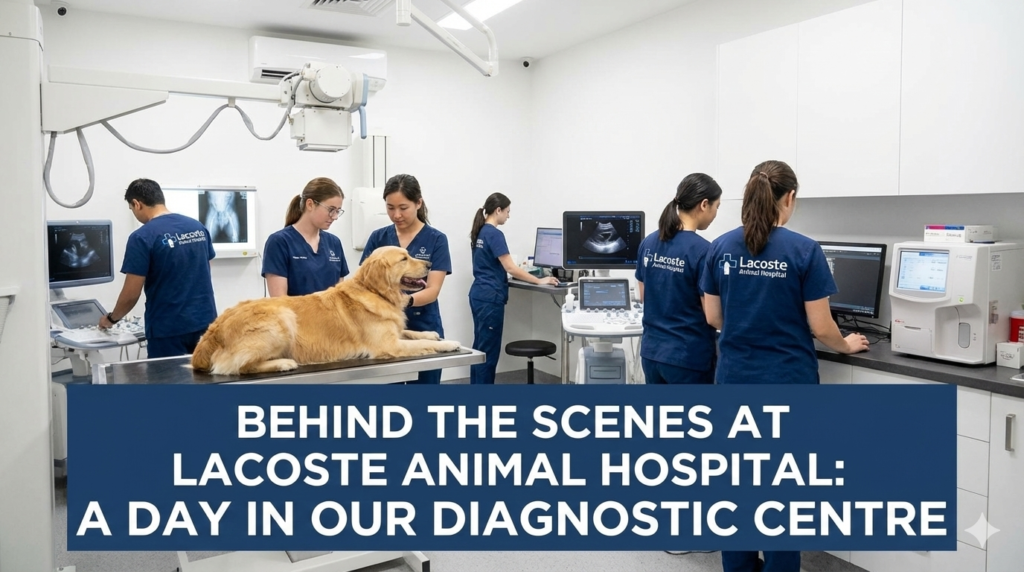
The sun hasn’t fully risen over Brampton yet, but inside our diagnostic centre at 50 Lacoste Blvd, the day has already begun. The hum of equipment warming up, the gentle beep of monitors, and the quiet shuffle of our veterinary team preparing for another busy day create a familiar symphony that most pet owners never get to hear. Today, we’re pulling back the curtain on what really happens in an animal diagnostic clinic and why these behind-the-scenes moments matter so much for your pet’s health.
The Heart of Modern Veterinary Medicine
Walk through the doors of Lacoste Animal Hospital during any of our operating hours, and you might notice the steady stream of patients coming and going. What you don’t see is the intricate dance happening in our diagnostic laboratory services area. This is where educated guesses transform into concrete answers, where mysteries become diagnoses, and where treatment plans take shape based on real, measurable data.
Our diagnostic centre isn’t just a room filled with machines. It’s the foundation of every medical decision we make. When Dr. Patel examines a lethargic Labrador or Dr. Singh investigates why a senior cat has suddenly stopped eating, the diagnostic tools available here help them see beyond the obvious symptoms to understand what’s truly happening inside your pet’s body.
Morning Rush: When the Diagnostic Centre Comes Alive
The typical morning at our well health diagnostic centre begins around 8:30 AM. Sarah, our senior veterinary technician with over twelve years of experience, arrives first. She checks the overnight logs, ensures all equipment calibrations are current, and prepares the laboratory for the day’s scheduled blood work. By the time our veterinarians arrive, the centrifuge is ready, the chemistry analyzer has completed its warm-up cycle, and the microscopy station is prepped for examination.
Tuesday mornings are particularly busy. With our doors opening at 9 AM, we usually have three to five pets already scheduled for wellness blood panels. These routine screenings might seem simple, but they’re anything but. Each sample tells a story about kidney function, liver health, blood sugar levels, and so much more. Processing these samples through our in-house diagnostics means pet owners get answers during the same visit, not days later.
The real advantage of having an in-house pet laboratory becomes clear when you witness it in action. Last Tuesday, a worried owner brought in Max, a seven-year-old Golden Retriever who had been drinking excessive water. Rather than sending samples to an external lab and asking the owner to wait anxiously for days, we ran a complete blood chemistry panel and urinalysis right here. Within ninety minutes, we had identified early signs of diabetes and started Max on a treatment plan the same morning.
The Technology That Makes a Difference
People often search for “diagnostic laboratory near me” without realizing that not all veterinary diagnostics are created equal. The difference between a basic clinic and a comprehensive animal diagnostic clinic comes down to capabilities. Our diagnostic centre houses equipment that would make many human medical facilities envious.
The cornerstone of our operation is our state-of-the-art hematology analyzer. This machine can process a complete blood count in under ten minutes, giving us detailed information about red blood cells, white blood cells, and platelets. When a pet presents with signs of infection, anemia, or clotting disorders, this rapid testing capability can literally be lifesaving.
Our chemistry analyzer works in tandem with the hematology equipment, measuring everything from kidney values and liver enzymes to electrolyte levels and blood proteins. Together, these machines form what we call our core diagnostic duo. But the technology doesn’t stop there.
The in-house medical imaging suite adjacent to our laboratory adds another dimension to pet diagnostic capabilities. Digital radiography provides instant images of bones, organs, and foreign bodies. The ultrasound machine allows us to examine hearts, abdominal organs, and detect pregnancies or fluid accumulations in real-time.
A Real Case Study: When Minutes Matter
Three months ago, on a busy Friday evening just after we opened at noon, a frantic owner rushed through our doors carrying Bella, a five-year-old Boxer who had collapsed during a walk. The dog was lethargic, her gums were pale, and her abdomen appeared distended.
Time became everything in that moment. While Dr. Chen performed the physical examination, our diagnostic team swung into action. Within five minutes, we had blood samples running through analyzers and an ultrasound probe on Bella’s abdomen. The blood work revealed severely low red blood cell counts. The ultrasound showed free fluid in the abdomen. A quick sample of that fluid confirmed our worst fear—Bella was bleeding internally, likely from a ruptured splenic tumor.
This is where the value of pet diagnostic services becomes undeniable. Without an in-house laboratory, we would have been working blind, unable to assess the severity of blood loss or make informed decisions about surgery. Instead, we had concrete data within minutes. Bella went straight to surgery, and today she’s recovered and thriving.
These critical cases remind us why we invested in comprehensive diagnostic capabilities. When you’re searching for “vet near me,” you’re not just looking for someone who can examine your pet. You need a facility equipped to provide answers when every minute counts.
The Daily Routine: More Than Just Blood Tests
Most days in our diagnostic centre aren’t quite as dramatic as Bella’s case, but they’re no less important. The majority of our veterinary diagnostics work involves routine monitoring, preventive screening, and investigating those nagging concerns that bring worried pet owners through our doors.
A typical afternoon might include preparing samples for reference laboratory testing. While our in-house pet laboratory near me handles the majority of tests, some specialized analyses still require external laboratories. Hormone panels, specific antibody titers, advanced cancer markers, and certain genetic tests get packaged carefully and shipped to our partner laboratories across Canada and the United States.
The coordination between our in-house capabilities and reference laboratory services creates a comprehensive diagnostic network. When Maria brings her elderly Siamese cat in for her annual senior wellness check, we run the standard blood panel in-house immediately. If those results show thyroid values at the upper edge of normal, we can send a specific thyroid hormone panel to the reference lab for more detailed analysis.
Understanding What We Look For
The average pet owner doesn’t need to understand the intricacies of blood chemistry, but knowing what we’re checking for can ease some anxiety. When we run a complete blood count, we’re essentially taking a census of the cells in the bloodstream. High white cell counts might indicate infection or inflammation. Low red cell counts suggest anemia, which could stem from dozens of different causes.
The chemistry panel tells us how organs are functioning. Elevated kidney values might catch kidney disease years before a pet shows symptoms. Abnormal liver enzymes could indicate anything from a reaction to medication to serious liver disease. High blood sugar points toward diabetes, while low blood sugar might indicate insulin-producing tumors or other metabolic disorders.
Urinalysis adds another layer of information. The concentration of urine tells us about kidney function and hydration status. Protein in urine might indicate kidney disease, urinary tract infections, or bladder inflammation. Crystals in the urine sample can help us prevent stone formation before it becomes a surgical emergency.
The Team Behind the Technology
Equipment and technology mean nothing without skilled people to operate them and interpret results. Our diagnostic team includes veterinary technicians who have specialized in laboratory work, some holding additional certifications in clinical pathology. They’re the ones who know when a machine needs recalibration, when a sample needs to be rerun, and when results don’t quite match what we’d expect.
Dr. Morrison, who joined our team last year after completing a residency at a specialty hospital, brings particular expertise in reading blood smears under the microscope. While our automated analyzers provide excellent data, sometimes nothing replaces the trained eye looking at cells directly. Abnormal cell shapes, parasites in blood cells, or unusual cell types can all be spotted during manual examination.
Training never stops in a modern diagnostic centre. Last month, the entire team spent a Saturday morning at a continuing education seminar on the latest advances in point-of-care testing. New rapid tests for specific infections, improved cardiac biomarkers, and advances in detecting internal bleeding mean we’re constantly expanding what we can diagnose on-site.
Preventive Diagnostics: Finding Problems Before They Become Emergencies
The most rewarding aspect of working in pet diagnostic isn’t the emergency cases, though those moments of saving lives are incredible. The real satisfaction comes from catching problems early through routine screening.
Take Charlie, a seemingly healthy eight-year-old Beagle who came in for his annual examination and wellness care. His owner reported no concerns. Charlie was eating well, maintaining his weight, and acting like his usual food-motivated self. The physical exam revealed nothing alarming.
But his blood work told a different story. The chemistry panel showed early kidney changes that wouldn’t have caused symptoms for another year or more. We caught it early enough to make dietary changes, start supplements, and monitor closely. Six months later, Charlie’s kidney values have stabilized. We potentially added years to his life simply because we ran baseline diagnostics.
This is why we recommend annual blood work for adult pets and twice-yearly testing for seniors. As a well health diagnostic centre, we’re not just treating sick animals. We’re working to keep healthy pets healthy longer.
The Evening Shift: Urgent Cases and Last-Minute Concerns
Our extended hours set us apart from many veterinary facilities in the area. When we’re open until 9 PM on Mondays and 10 PM on Fridays, Saturdays, and Sundays, our diagnostic centre remains ready for action. Those evening hours often bring concerned pet owners who noticed something wrong after their regular veterinarian closed.
Last Saturday evening around 8 PM, a couple brought in their young Labrador who had vomited multiple times and seemed uncomfortable. The diagnostic workup revealed he had eaten something he shouldn’t have, leading to an intestinal blockage. Radiographs showed the problem clearly. Because we had diagnostic capabilities available on a Saturday night, we could provide the owners with options and information immediately, rather than sending them to an emergency facility hours away.
Having these capabilities available during our extended operating hours means Brampton pet owners have access to comprehensive care when they need it most. Whether you call our main line at (905) 913-8888 during a weekday or show up on a Sunday evening, the same diagnostic tools are available.
Quality Control: Ensuring Accuracy Every Time
Running an in-house laboratory comes with serious responsibilities. Every morning, we run control samples with known values through our machines. If a result doesn’t match what we expect, we don’t use that machine until we’ve identified and fixed the problem. Weekly, we run more extensive quality control checks. Monthly, we send samples to external laboratories to verify our results match industry standards.
This attention to accuracy matters because veterinarians make life-and-death decisions based on these numbers. If a machine incorrectly shows low calcium levels, we might treat for a condition the pet doesn’t have while missing the real problem. Quality control isn’t exciting work, but it’s absolutely essential.
Our participation in external quality assurance programs means independent laboratories regularly send us mystery samples. We analyze them just like patient samples, submit our results, and get scored against thousands of other veterinary laboratories worldwide. It’s one more way we ensure the diagnostic services we provide meet the highest standards.
Connecting Diagnostics to Treatment
The diagnostic centre doesn’t exist in isolation. It’s intimately connected to every aspect of care we provide. When a surgical patient needs pre-anesthetic blood work, we process it immediately to ensure it’s safe to proceed with surgery. When a patient undergoing treatment for kidney disease comes in for monitoring, we track trends in kidney values to adjust medication dosages.
For pets with chronic conditions like diabetes or thyroid disease, our diagnostic centre becomes a regular stop. These patients often know our laboratory technicians by name, and those technicians take personal pride in seeing these pets stay stable and healthy.
Frequently Asked Questions About Our Diagnostic Services
-
How long does it take to get blood test results?
For our in-house testing, most results are available within 15 to 60 minutes. Complete blood counts typically take about ten minutes to process. Chemistry panels might take thirty to forty-five minutes. This allows us to discuss results during the same visit.
-
Are in-house tests as accurate as sending samples to external laboratories?
Our in-house equipment is hospital-grade and produces results that match or exceed what external laboratories provide for routine testing. We maintain strict quality control standards and regularly verify our accuracy against reference laboratories.
-
What types of tests can’t be done in-house?
Highly specialized tests like hormone panels beyond thyroid testing, complex antibody titers, genetic testing, and certain cancer markers typically require reference laboratory services. We coordinate these tests seamlessly with our partner laboratories.
-
How often should my pet have diagnostic testing?
For healthy adult pets, annual blood work during their wellness examination is generally sufficient. Pets over seven years old benefit from testing every six months. Pets with chronic conditions may need monthly or quarterly monitoring depending on their specific situation.
-
What happens if test results are abnormal?
When we find abnormal results, we discuss them with you immediately. Sometimes we recommend additional testing to pinpoint the cause. Other times, we’ll start treatment and recheck in a few weeks to ensure improvement. Each situation is unique, and we tailor our recommendations to your pet’s specific needs.
Why Location and Hours Matter for Diagnostic Services
Being located at 117, 50 Lacoste Blvd in Brampton means we serve families throughout the area who need accessible, high-quality veterinary diagnostics. Our varied hours accommodate different schedules. Whether you need a morning appointment on Tuesday at 9 AM or an evening visit on Monday before we close at 9 PM, our diagnostic capabilities remain the same.
This accessibility matters especially for working families who can’t always take time off during traditional business hours. Knowing you have a well health diagnostic centre available when you need it provides peace of mind.
The Future of Veterinary Diagnostics
Veterinary medicine advances rapidly, and our commitment to staying current means regular equipment updates and staff training. We’re currently evaluating the latest generation of blood gas analyzers and exploring advanced point-of-care cardiac markers that would expand our emergency diagnostic capabilities even further.
The goal remains constant though: provide Brampton pet owners with the most comprehensive, accurate, and timely diagnostic services possible. Whether you’re searching for an “animal diagnostic clinic” for the first time or you’re a long-time client of Lacoste Animal Hospital Brampton, you can trust that our diagnostic centre represents the best in modern veterinary medicine.
Your Partner in Pet Health
Understanding what happens behind the scenes in our diagnostic centre hopefully demystifies the process. When your veterinarian recommends blood work or diagnostic imaging, you now know that recommendation comes backed by sophisticated equipment, skilled technicians, and veterinarians who interpret results in the context of your pet’s complete health picture.
We’re here to answer questions, explain results, and partner with you in keeping your pet healthy for years to come. Our diagnostic centre is more than just machines and test tubes. It’s where caring meets science, where data becomes understanding, and where your pet’s health story unfolds in remarkable detail.
If you have concerns about your pet’s health or want to schedule preventive wellness testing, reach out to us at petcare@lacosteanimalhospital.ca or call (905) 913-8888. Our team is ready to provide the diagnostic excellence your pet deserves.
The next time you visit Lacoste Animal Hospital, you’ll walk through our doors knowing that behind that friendly reception area lies a sophisticated diagnostic centre working to provide answers, peace of mind, and the foundation for excellent veterinary care. That’s the commitment we make to every pet and every family who trusts us with their animal’s health.