
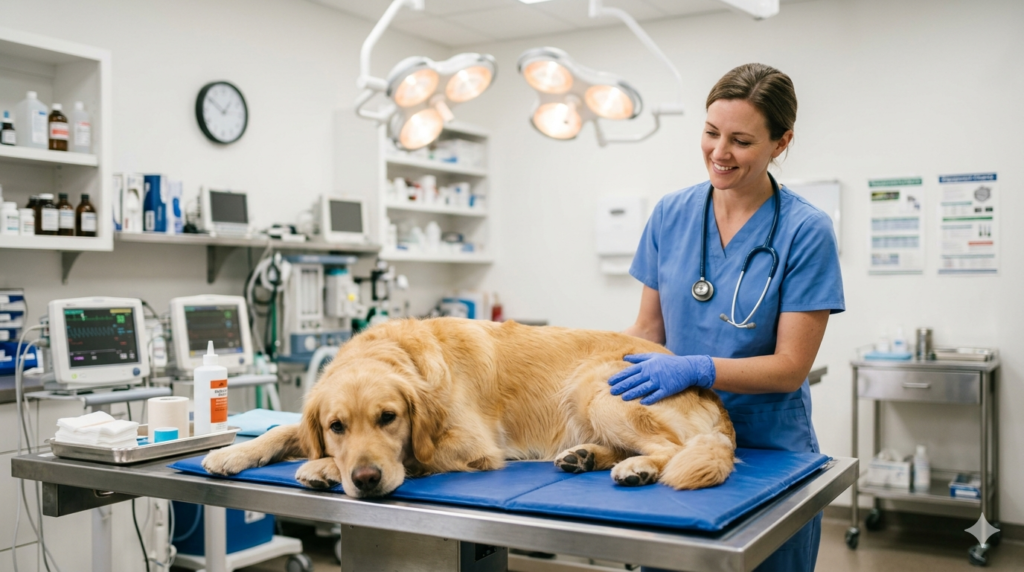
The moment a veterinarian says the word “surgery,” something shifts in the room. Pet owners sit up straighter, their breathing changes, and the questions start flooding in. That reaction is completely understandable. Pet surgery carries emotional weight that few other veterinary recommendations match, and the uncertainty around what actually happens — from the first consultation to the last follow-up appointment — keeps many families awake the night before a scheduled procedure.
At Lacoste Animal Hospital, located at 117, 50 Lacoste Blvd in Brampton, Ontario, our veterinary team walks through hundreds of surgical cases each year. Some are straightforward. Others are complicated. But the process behind every single one follows the same careful, methodical sequence that prioritizes your animal’s safety above everything else. This guide breaks down that sequence so you know exactly what to expect, why each step matters, and how to prepare yourself and your pet for the experience.
Why Your Veterinarian Might Recommend Pet Surgery
Not every health concern requires a surgical solution, and a responsible veterinary team will exhaust conservative options before recommending an operation. But certain conditions don’t respond to medication, rest, or dietary changes alone.
Soft tissue procedures — including spay and neuter operations, mass removals, bladder stone extractions, and foreign body retrievals — represent the most common category of animal surgery performed in general practice. Orthopedic procedures address fractures, ligament tears, and joint instability. Dental extractions, while sometimes overlooked as “minor,” involve anesthesia and careful surgical technique, particularly when roots are fractured or abscessed beneath the gumline.
The Canadian Veterinary Medical Association emphasizes that animal surgery demands extensive knowledge of anatomy, physiology, pathology, and pain management — and should only be performed by licensed veterinarians meeting professional standards. The decision to proceed with vet surgery always begins with a thorough clinical assessment. Your veterinarian considers the diagnosis, the severity, your pet’s age, breed-specific risk factors, and whether delaying the procedure would allow the condition to worsen. A two-centimetre skin mass on a twelve-year-old Labrador, for example, requires a different risk-benefit conversation than the same mass on a three-year-old Border Collie. Context shapes every recommendation.
The Pre-Surgical Assessment — Where It All Begins
The surgical journey doesn’t begin in the operating room. It begins days or even weeks earlier, during the pre-surgical consultation. This appointment is one of the most important steps in the entire process, and it often doesn’t get the attention it deserves.
During this visit, the veterinarian performs a complete physical examination — checking heart sounds, respiratory rate, hydration status, lymph nodes, abdominal palpation, and overall body condition. Animals with underlying cardiac murmurs, for instance, may need a different anesthetic protocol than those with clean cardiovascular exams. That kind of detail saves lives.
Bella’s Story — When Bloodwork Changed the Plan
A three-year-old French Bulldog named Bella was booked for a routine feline spay — except Bella was a dog, and there was nothing routine about what her in-house diagnostics revealed. Her pre-surgical bloodwork showed elevated liver enzymes and a mildly low platelet count. Neither value was alarming on its own, but together they warranted further investigation before putting her under general anesthesia.
The veterinarian ordered digital X-rays and ultrasound imaging to rule out structural abnormalities. The ultrasound showed a congested liver consistent with a portosystemic shunt — a vascular abnormality that would have made standard anesthesia significantly riskier. Bella’s surgery was postponed, her condition was stabilized with dietary and medical management, and she was eventually cleared for a modified surgical approach with adjusted anesthetic agents and closer monitoring.
Without that pre-surgical bloodwork, Bella’s story could have gone very differently. This is exactly why veterinary surgical teams insist on baseline lab panels before every procedure, even in young, apparently healthy animals.
Day of Surgery — A Step-by-Step Breakdown
Surgery day tends to be the most stressful part for pet owners. Understanding what happens behind the scenes takes some of the anxiety away.
Admission and Fasting Confirmation
You’ll bring your pet to the hospital in the morning, and the veterinary team will confirm that fasting instructions were followed. Most animals need to be withheld from food for eight to twelve hours before anesthesia to reduce the risk of aspiration — a serious complication where stomach contents enter the airway during intubation. Water restrictions vary depending on the procedure, and the team will have provided specific guidance during the pre-surgical consultation.
The admitting technician reviews your pet’s medical history, confirms current medications, and addresses any last-minute questions. This is also when consent forms are reviewed and signed.
Anesthesia and Monitoring
Modern veterinary anesthesia bears little resemblance to what it looked like twenty years ago. At Lacoste Animal Hospital’s surgical services suite, every patient receives a customized anesthetic protocol based on their individual health profile. There’s no one-size-fits-all cocktail.
The process typically involves three stages. A pre-anesthetic sedation calms the patient and provides initial pain relief. Induction follows, transitioning the animal from sedated to fully anesthetized. Maintenance anesthesia — usually delivered through an endotracheal tube connected to a gas anesthesia machine — keeps the patient in a stable, controlled plane of unconsciousness throughout the procedure.
While your pet is under, a trained veterinary technician monitors vital signs continuously. Heart rate, blood oxygen saturation, end-tidal carbon dioxide levels, blood pressure, body temperature, and electrocardiogram readings are all tracked in real time. Any deviation from expected parameters triggers an immediate response. The AAHA Anesthesia and Monitoring Guidelines reinforce that robust monitoring throughout sedation and surgery is not optional — it is a foundational standard of patient safety. This level of monitoring is what separates a well-equipped animal hospital surgery environment from a clinic that cuts corners.
The Procedure Itself
The specifics depend entirely on what’s being done. A routine spay involves removing the ovaries and uterus through an abdominal incision. A mass removal requires careful dissection to ensure clean margins — meaning the surgeon takes enough surrounding tissue to reduce the chance of regrowth. A foreign body retrieval might involve opening the stomach or intestine, removing the object (socks, corn cobs, and children’s toys rank among the most common culprits in Brampton), and closing the organ in layers.
Regardless of the procedure, the surgical site is clipped, scrubbed, and draped in a sterile field. The surgeon wears sterile gloves and a gown, and instruments are autoclaved. Infection control is non-negotiable in small animal medicine and surgery, and surgical site infections, while rare, are almost always traceable to a break in sterile technique or inadequate post-operative wound care at home.
Recovery and Post-Operative Care
The period immediately following surgery is just as critical as the procedure itself. This is where the majority of preventable complications occur, and it’s where your role as a pet owner becomes essential.
The First Few Hours
After the surgeon closes the incision and anesthesia is discontinued, your pet enters the recovery phase. The veterinary team monitors breathing, heart rate, and responsiveness as the animal gradually wakes up. Some pets come around quickly. Others take their time. Brachycephalic breeds — Bulldogs, Pugs, Boston Terriers, Persian cats — often require extended monitoring because their airway anatomy makes the transition out of anesthesia more delicate.
Pain management begins before the animal is even awake. Most surgical patients receive a multimodal pain protocol that may include injectable anti-inflammatories, opioid analgesics, and local nerve blocks applied during the procedure. The goal is to stay ahead of the pain rather than chasing it after it starts.
Rocky’s Recovery — A Lesson in Following Instructions
Rocky, a four-year-old mixed breed, came in for a standard neuter. The procedure was textbook. Recovery was smooth. He went home that same afternoon with clear discharge instructions: keep the cone on, restrict activity for ten days, and monitor the incision for swelling, discharge, or redness.
Three days later, Rocky was back. His owner had removed the cone because he “seemed so uncomfortable,” and Rocky had licked the incision open. What started as a simple surgical site turned into a wound that needed re-suturing under sedation, a course of antibiotics, and an additional two weeks of restricted activity.
Rocky’s case is a reminder that post-operative instructions exist for a reason. The e-collar — sometimes called the cone of shame — is genuinely one of the most effective tools in preventing surgical complications. Lick guards and recovery suits are alternatives for animals that truly can’t tolerate the cone, but the veterinary team should be consulted before switching.
What to Watch For at Home
During the first seven to fourteen days after surgery, you’re essentially serving as your pet’s home nurse. The surgical aftercare checklist typically includes monitoring the incision daily for signs of infection, keeping the area dry, preventing your pet from running, jumping, or playing rough, administering medications on schedule, and returning for a follow-up examination when instructed.
Subtle signs that something isn’t right include lethargy that doesn’t improve after the first twenty-four hours, refusal to eat for more than a day, swelling at the incision site that increases rather than decreases, discharge that changes from clear to cloudy or develops an odour, and any sudden change in breathing pattern. If any of these occur, your veterinarian needs to know.
Understanding the Difference Between Elective and Emergency Animal Surgery
Not every surgery is planned weeks in advance. Some happen on the same day the animal walks through the door.
Elective procedures — spay and neuter operations, scheduled mass removals, dental cleanings with extractions — allow time for pre-planning. Blood panels are run in advance, anesthetic risks are evaluated, and the surgical schedule is set for a specific morning.
Emergency animal surgeries follow a compressed version of the same protocol. A dog that swallowed a kitchen skewer doesn’t have the luxury of a two-week lead time. The veterinary team at Lacoste’s emergency and urgent care unit runs diagnostics rapidly, stabilizes the patient, and moves to surgery as quickly as safely possible. The same monitoring standards apply. The same sterile technique is used. The timeline is simply shorter.
Understanding this distinction matters because it shapes what your experience looks like as a pet owner. An elective surgery gives you time to prepare mentally and logistically. An emergency procedure asks you to trust the team and make decisions quickly. Both outcomes depend on the same foundation: a well-trained team, proper equipment, and protocols that don’t bend under pressure.
How Preventive Care Reduces the Need for Surgery
This might sound counterintuitive in a blog post about surgical procedures, but one of the most effective ways to protect your pet from surgery is investing in consistent wellness and preventive care.
Annual examinations catch early-stage masses before they grow large enough to require complex excisions. Routine dental assessments identify periodontal disease before it progresses to the point of extraction. Bloodwork panels reveal organ dysfunction long before clinical symptoms appear. Our detailed guide on what preventive care for pets really means covers this connection in depth.
The relationship between diagnostics and surgery is equally important. Pre-surgical imaging and lab panels don’t just protect the patient during the procedure — they often reveal conditions that change the surgical plan entirely, as Bella’s case demonstrated. You can read more about how these diagnostic workflows operate in our post on a day in our diagnostic centre.
Choosing the Right Veterinary Surgical Team in Brampton
When families in Brampton and the surrounding Peel Region search for vet clinics near me that offer surgical capabilities, they’re often comparing facilities without knowing what to compare. Square footage and waiting room aesthetics tell you nothing about surgical outcomes.
What matters is whether the clinic performs a full pre-surgical workup on every patient. Whether the anesthetic protocols are individualized. Whether a dedicated technician monitors vitals throughout the procedure rather than having the surgeon glance at a screen between suture passes. Whether pain management is multimodal and proactive rather than reactive. And whether the team follows up after discharge rather than simply handing you a sheet of instructions and wishing you luck. As the American Veterinary Medical Association recently reported, updated anesthesia monitoring guidelines now stress the importance of surgical safety checklists and team communication tools as core components of safe veterinary care.
These aren’t luxury features. They’re the baseline of responsible veterinary surgical practice, and they should be standard at any animal hospital offering surgery in Brampton or anywhere else.
Frequently Asked Questions About Pet Surgery
-
How long does a typical pet surgery take at an animal hospital?
The duration varies widely depending on the procedure. A standard spay or neuter may take thirty to sixty minutes of actual surgical time, while more complex operations like foreign body retrievals or orthopedic repairs can run two hours or longer. The total time your pet spends at the hospital includes pre-surgical preparation, the procedure itself, and monitored recovery before discharge.
-
What pre-surgical tests does my pet need before vet surgery?
Most veterinary teams require a pre-anesthetic blood panel that evaluates liver and kidney function, blood cell counts, and clotting ability. Depending on your pet’s age and health history, the veterinarian may also recommend chest radiographs, an electrocardiogram, or advanced imaging to assess the surgical site before the operation begins.
-
How should I care for my pet after animal surgery?
Post-operative care involves keeping your pet calm and restricted from vigorous activity, maintaining the protective e-collar or recovery suit, administering all prescribed medications on schedule, and monitoring the incision site daily. Most surgical patients return for a follow-up examination within ten to fourteen days, at which point sutures or staples may be removed.
-
Is anesthesia safe for older pets undergoing veterinary surgical procedures?
Age alone is not a contraindication to anesthesia. The veterinary team evaluates each patient individually based on organ function, cardiovascular health, and overall condition. Older animals may require modified anesthetic protocols, additional monitoring, and tailored pain management — but many senior pets undergo surgery safely and recover well when the approach is carefully planned.
-
When should I seek emergency care instead of scheduling elective surgery?
If your pet is showing signs of acute distress — vomiting repeatedly, struggling to breathe, unable to stand, passing blood, or showing a rapidly expanding abdomen — that situation requires immediate veterinary attention. Elective surgical scheduling applies only to non-urgent conditions where there is time to plan, prepare, and optimize the patient before the procedure.
Your pet’s surgical journey doesn’t have to feel overwhelming. Whether your animal needs a planned procedure or you’re navigating an unexpected diagnosis, the veterinary surgical team at Lacoste Animal Hospital in Brampton is here to guide you through every step. Call us at +1 (905) 913-8888 or visit us at 117, 50 Lacoste Blvd, Brampton, ON L6P 3Z8, to schedule a consultation. You can also reach us at petcare@lacosteanimalhospital.ca to ask questions before your visit.