
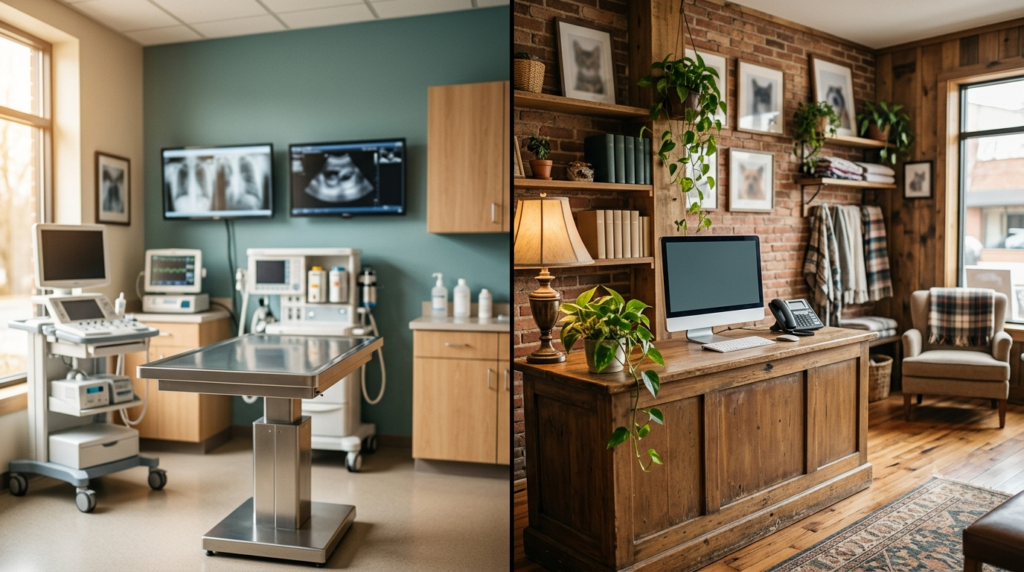
You’ve probably seen both terms on signs around Brampton and figured they meant the same thing. Most people do. But the animal hospital vs veterinary clinic question actually matters more than it sounds, especially the moment your pet needs something beyond a routine checkup. Picking the wrong type of facility for a serious issue can mean an extra referral, a delay in treatment, or a second drive across town while your pet is uncomfortable.
At Lacoste Animal Hospital, an animal hospital near me that families across Brampton and the Peel Region rely on, this question comes up constantly from new clients trying to understand what sets one facility apart from another. This guide breaks down the real differences in plain language, so you know exactly where to go next time your pet needs care.
The Short Answer
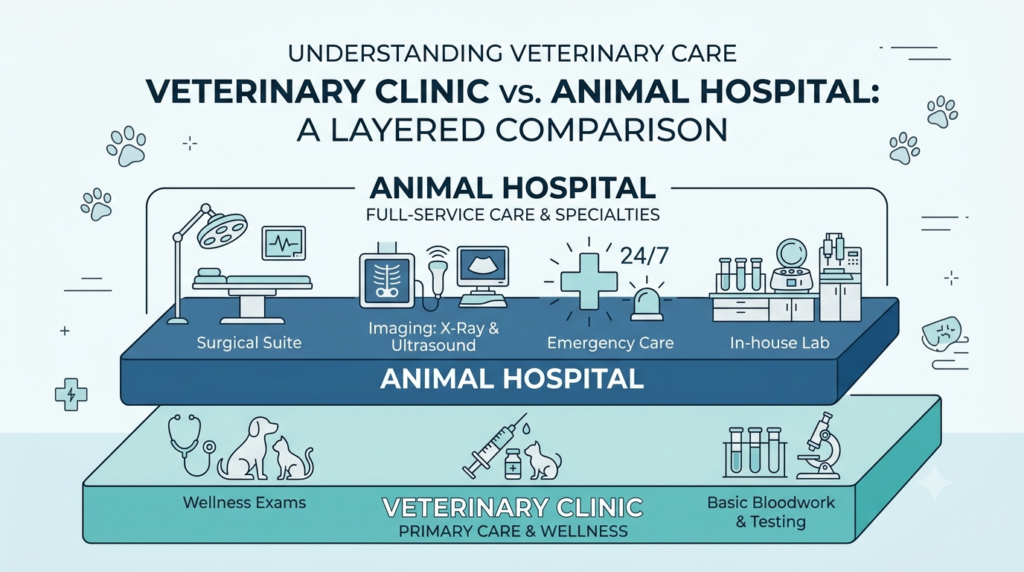
In everyday conversation, “animal hospital” and “veterinary clinic” get used interchangeably, and honestly, a lot of facilities blur the line on purpose because it’s good for business. But structurally, there are real differences in scope, equipment, and staffing that separate the two. A veterinary clinic is typically built around scheduled, routine care. An animal hospital is built to handle everything a clinic does, plus the more complex, urgent, and surgical cases that a clinic setup usually can’t.
What a Veterinary Clinic Typically Offers
A standard veterinary clinic is designed around planned visits. Think wellness exams, vaccinations, basic bloodwork, minor treatments, and prescription refills. Clinics are often smaller operations, sometimes with a single veterinarian or a small team, and they tend to refer out anything requiring advanced imaging, overnight monitoring, or surgical intervention.
Common veterinary clinic services include:
- Annual and semi-annual wellness exams
- Core vaccinations
- Basic parasite screening and prevention
- Minor wound care
- Simple diagnostic bloodwork
- Prescription management
There’s nothing wrong with this model. For a huge portion of pet care, it’s exactly what’s needed. But a clinic’s limitations become obvious the moment a pet’s condition escalates past what the on-site equipment or staffing can handle.
What an Animal Hospital Typically Offers
An animal hospital operates on a broader scope, usually with in-house diagnostic imaging, a surgical suite, a larger veterinary and technician team, and the capacity to manage same-day urgent or emergency cases without a referral. It’s essentially a clinic’s services plus a deeper layer of medical infrastructure sitting behind it.
Common animal hospital capabilities include:
- Everything a standard clinic offers
- Digital X-ray and ultrasound imaging on-site
- A dedicated surgical suite for both routine and complex procedures
- Same-day or walk-in urgent and emergency care
- In-house laboratory testing for faster results
- Coordinated care across wellness, diagnostics, surgery, and end-of-life services under one roof
Animal Hospital vs Veterinary Clinic: Side-by-Side Comparison
| Factor | Veterinary Clinic | Animal Hospital |
|---|---|---|
| Primary focus | Routine, scheduled care | Routine care plus complex, urgent cases |
| Typical staffing | Small team, often one veterinarian | Larger team including multiple veterinarians and technicians |
| Diagnostic imaging | Limited or referred out | Digital X-ray and ultrasound on-site |
| Surgical capacity | Minor procedures only | Full surgical suite for routine and complex cases |
| Emergency handling | Usually refers out | Same-day or walk-in urgent and emergency care |
| Lab testing | Often sent to outside labs | In-house lab for faster results |
| Appointment model | Scheduled visits only | Scheduled visits plus urgent walk-ins |
| Best suited for | Healthy pets needing routine maintenance | Pets needing diagnostics, surgery, or urgent attention |
A Real Example: Same Symptom, Two Different Paths
Case studies make this distinction easier to picture. The following is an anonymized composite reflecting the kind of situation our team sees regularly, not a specific client record.
Scenario One: A healthy two-year-old cat was due for her annual wellness visit and booster vaccinations. A quick physical exam, a vaccine, and a parasite screening covered everything she needed. A standard veterinary clinic visit was more than sufficient, and there was no reason to look for anything more complex.
Scenario Two: A ten-year-old dog came in limping badly after jumping off a porch, with visible swelling around the joint. A clinic without on-site imaging would likely have needed to refer the family elsewhere for X-rays, adding hours of delay and a second facility to coordinate with. At an animal hospital equipped with in-house digital imaging, the same visit included X-rays, a diagnosis, and a treatment plan within a single appointment, without a referral or a second trip.
The takeaway isn’t that one facility type is “better.” It’s that matching the right level of care to the situation saves time, reduces stress for both pet and owner, and often leads to faster treatment.
Signs You Need Hospital-Level Care, Not Just a Clinic Visit
It helps to have a mental checklist for situations where a standard clinic likely isn’t enough:
- Your pet needs same-day imaging like X-rays or ultrasound
- Surgery is being discussed, even for something routine like a mass removal
- Symptoms are sudden and严重 enough that waiting for a scheduled appointment feels risky
- You’re being told a referral to another facility will be necessary anyway
- Your pet needs ongoing monitoring beyond a quick in-and-out visit
If any of these apply, heading straight to a facility built for emergency and urgent veterinary care usually saves a step compared to starting at a smaller clinic and getting referred out afterward.
Why This Distinction Matters More Than People Realize
Recent shifts in how Google evaluates content quality have reinforced something veterinary teams already knew: pet owners want practical, first-hand guidance, not generic definitions. Google’s ongoing core updates through 2026 have continued to reward content built around real experience and genuinely useful comparisons rather than surface-level explanations, which is exactly why walking through actual scenarios matters more than a dictionary-style breakdown of two terms.
There’s also a practical financial angle. Recent industry research has found that a meaningful share of pet owners have delayed or skipped recommended veterinary care due to cost concerns, and unexpected multi-facility referrals only add to that friction. Choosing a facility that can handle diagnostics, treatment, and follow-up in one place, rather than bouncing between a clinic and a separate imaging or surgical center, tends to reduce both the financial and logistical burden on families.
What This Means for Choosing a Facility in Brampton
If your pet is generally healthy and you’re booking routine wellness visits, a smaller clinic model works perfectly well. But if you want one facility that can grow with your pet’s needs, handling everything from a first puppy vaccine to emergency surgery years later without you needing to research a new provider every time something changes, an animal hospital setup offers more continuity.
This is part of why many Brampton families ultimately choose a full-service veterinary provider that combines wellness, diagnostics, surgery, and urgent care rather than juggling multiple specialists across town. One consistent medical record, one team that knows your pet’s history, and no guessing about where to go next.
The Bottom Line
The animal hospital vs veterinary clinic decision doesn’t need to be complicated. Ask yourself what your pet actually needs today, and just as importantly, what they might need down the road. A clinic covers the basics well. A hospital covers the basics and everything beyond them. Knowing which one you’re walking into, and why, puts you in a much stronger position the next time your pet needs care.
Frequently Asked Questions
-
Is an animal hospital more expensive than a veterinary clinic?
Not necessarily. Costs depend on the specific service, not the facility type alone. A routine wellness exam at either type of facility is often similarly priced, since it’s the same basic service. Costs typically diverge only when advanced diagnostics, surgery, or emergency care come into play, since those services require equipment and staffing that a smaller clinic setup usually doesn’t maintain.
-
Can I go to an animal hospital for a routine checkup?
Yes. Animal hospitals handle the full range of veterinary care, including routine wellness exams, vaccinations, and preventive checkups, not just complex or urgent cases. Many pet owners choose an animal hospital as their regular provider specifically because it means never needing to switch facilities later if their pet eventually needs surgery, imaging, or emergency treatment.
-
What should I do if my regular clinic can’t handle my pet’s condition?
If your veterinary clinic recommends a referral for imaging, surgery, or specialized testing, ask whether a nearby animal hospital could handle the entire process in one visit instead. This often saves time compared to coordinating between two separate facilities, and it means your pet’s full history stays within one connected medical record rather than being split across providers.
-
Do animal hospitals accept walk-ins for urgent situations?
Many animal hospitals, unlike standard clinics, accept same-day or walk-in visits for urgent conditions without requiring you to book weeks in advance. This is one of the clearest practical differences between the two facility types, since a smaller clinic typically isn’t staffed or equipped to absorb unscheduled urgent cases the way a hospital setup is designed to.
When your pet’s needs are still simple, either option will likely serve you well, but knowing the difference now means you won’t be scrambling to figure it out during an actual emergency.