
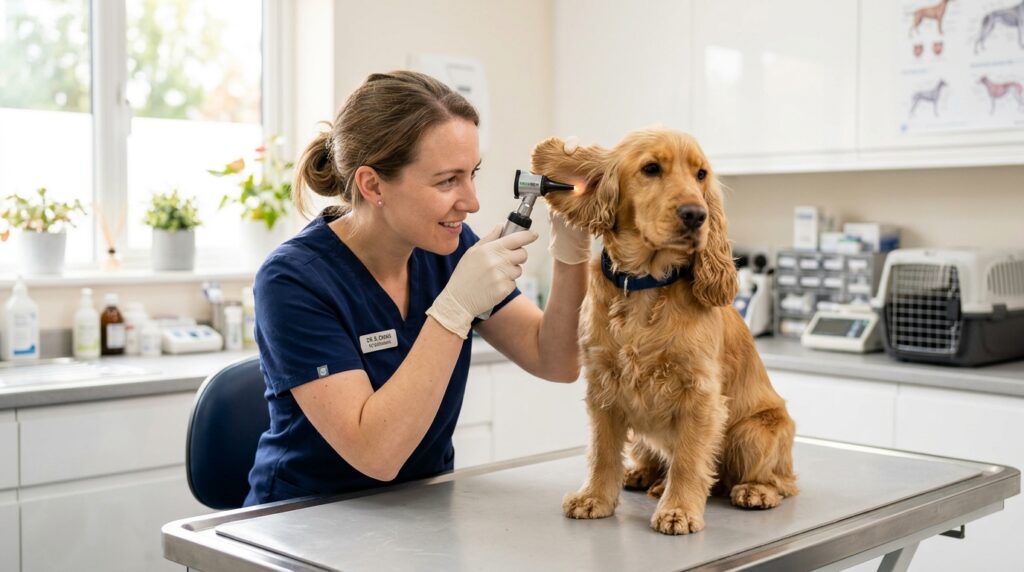
A dog ear infection is one of the most common reasons pet owners in Brampton bring their dogs to Lacoste Animal Hospital, whether they are searching for a trusted vet near me or already know exactly where to go. Ear infections can look minor at first, a bit of head shaking or scratching, but left untreated they can turn painful fast and sometimes lead to lasting damage. This guide walks through the symptoms, causes, treatment options, and prevention steps every dog owner should know.
What Is a Dog Ear Infection?
An ear infection in dogs, medically known as otitis, happens when bacteria, yeast, or parasites overgrow inside the ear canal and trigger inflammation. Dogs have a longer, more L-shaped ear canal than humans, which traps moisture, wax, and debris far more easily. That anatomy is exactly why ear infections in dogs are so common and why they tend to come back if the underlying cause is never addressed.
Most infections start in the outer ear canal, a condition vets call otitis externa. If it goes untreated, the infection can spread deeper toward the middle and inner ear, where it becomes harder to resolve and more likely to cause lasting complications such as hearing loss or balance problems.
Common Causes of Ear Infections in Dogs
Ear infections rarely appear out of nowhere. In almost every case, something else is going on first that creates the right conditions for bacteria or yeast to take hold.
Allergies (Environmental and Food)
Allergic skin disease is the single biggest driver of chronic ear infections in dogs. Seasonal pollen, dust mites, and certain proteins in food can all trigger inflammation that changes the ear canal’s environment, making it easier for yeast and bacteria to multiply. Dogs with allergy-related ear disease often have recurring flare-ups every few months rather than a one-time infection. The American College of Veterinary Dermatology notes that ear and skin disease frequently go hand in hand, which is why a dermatology-minded workup often matters as much as ear-specific treatment.
Moisture Trapped in the Ear Canal
Swimming, bathing, or humid weather can leave moisture sitting in the ear canal, creating a warm, damp environment where bacteria and yeast thrive. This is especially common through Ontario’s humid summer months and after lake trips.
Ear Mites and Parasites
Ear mites are highly contagious, tiny parasites that live in the ear canal and cause intense itching along with a dark, crumbly discharge. According to the Companion Animal Parasite Council, ear mites are more common in young dogs and in households with multiple pets, since they spread easily through close contact.
Hormonal and Immune Conditions
Underlying conditions like hypothyroidism or Cushing’s disease can weaken the skin’s natural defenses and lead to recurring ear infections that do not fully clear even with treatment. If a dog has repeated infections without an obvious external cause, bloodwork is often the next logical step.
Foreign Objects and Ear Canal Structure
Grass seeds, foxtails, and other foreign debris can lodge in the ear canal, especially in dogs that spend a lot of time outdoors. Breeds with narrow or hairy ear canals are also more prone to blockages that trap wax and moisture.
Symptoms of Ear Infections in Dogs to Watch For
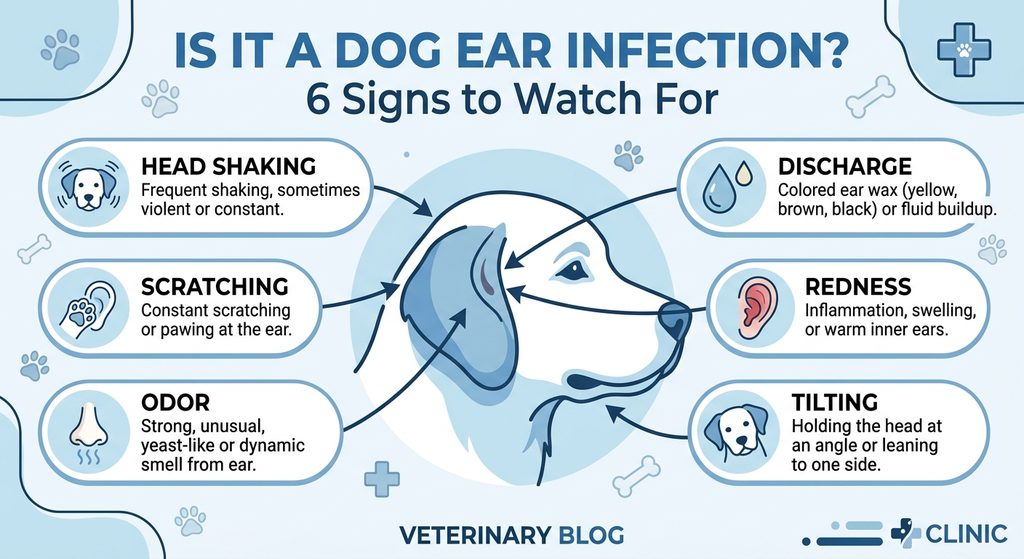
The earlier an ear infection in dogs is caught, the easier and less expensive it typically is to treat. Common signs include:
- Frequent head shaking or head tilting
- Scratching or pawing at one or both ears
- A strong, unpleasant odor coming from the ear
- Dark brown, yellow, or bloody discharge
- Redness, swelling, or visible sores inside the ear flap
- Sensitivity or pain when the ears are touched
- Loss of balance or unusual clumsiness in severe cases
Not every dog shows all of these symptoms at once. Some dogs, especially those with chronic allergy-driven ear disease, show milder, ongoing signs that owners eventually dismiss as normal for their pet. That assumption is one of the biggest reasons chronic ear infections in dogs go untreated for months.
Which Dogs Are Most Prone? A Breed Comparison
Ear shape and hair growth patterns play a major role in how often a dog develops ear infections. The table below compares risk factors across common ear types.
| Ear Type | Example Breeds | Why They Are Prone | Recommended Care |
|---|---|---|---|
| Floppy, low-hanging ears | Cocker Spaniels, Basset Hounds, Labrador Retrievers | Reduced airflow traps moisture and heat inside the canal | Routine ear checks and cleaning after baths or swimming |
| Hairy ear canals | Poodles, Schnauzers, Shih Tzus | Hair growth inside the canal blocks airflow and traps wax | Regular ear hair trimming and cleaning |
| Erect, open ears | German Shepherds, Huskies, Chihuahuas | Better airflow, but still prone to allergy-driven infections | Watch for allergy symptoms alongside ear health |
| Narrow ear canals | Shar-Peis, Bulldogs | Structural narrowing makes debris harder to clear naturally | More frequent veterinary ear exams |
If your dog falls into a higher-risk category, a routine wellness exam is one of the easiest ways to catch early ear changes before they become a full infection.
How Veterinarians Diagnose Ear Infections in Dogs
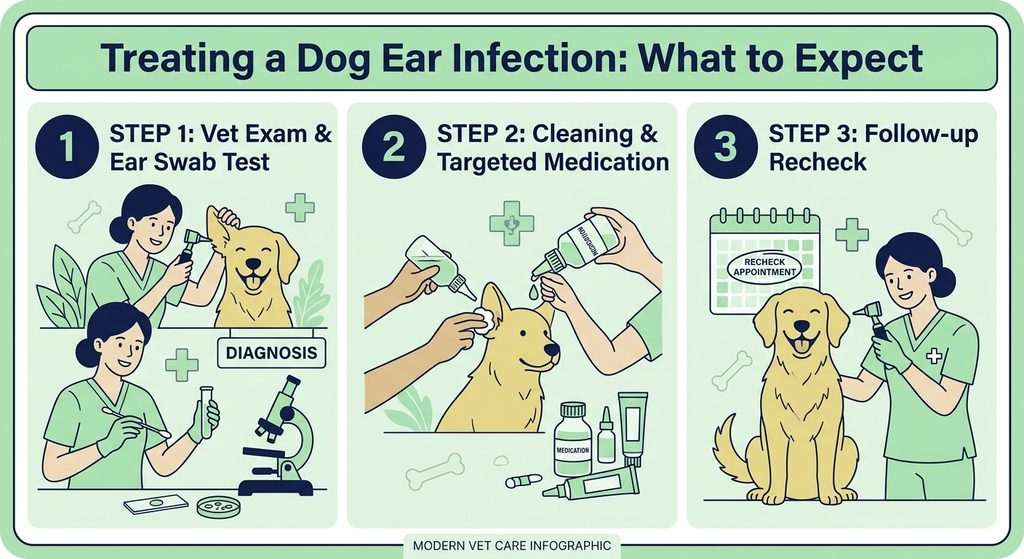
Diagnosing a dog ear infection accurately is what separates a quick recovery from a recurring problem. During an exam, a veterinarian will typically look inside the ear canal with an otoscope to check for redness, discharge, foreign objects, or a ruptured eardrum. A swab sample is then examined under a microscope to identify whether the infection is bacterial, yeast-based, mite-related, or a combination.
This step matters because treating a yeast infection with an antibiotic meant for bacteria, or vice versa, will not resolve the problem and can allow it to worsen. Clinics with in-house diagnostics can usually confirm the type of infection during the same visit, which means treatment can start immediately instead of waiting on outside lab results.
Dog Ear Infection Treatment Options
Treatment depends on the underlying cause, the severity of the infection, and whether it is a first-time problem or a recurring one.
Ear Cleaning and Topical Medication
For most first-time or mild infections, a veterinarian will thoroughly clean the ear canal to remove wax, debris, and discharge, then prescribe a topical medication such as medicated drops or ointment. Cleaning first matters because built-up debris can block the medication from reaching the infected tissue.
Oral Medications for Deeper or Resistant Infections
If the infection has spread toward the middle ear, or if it is resistant to topical treatment, oral antibiotics or antifungal medication may be needed. Pain relief is also commonly prescribed, since ear infections are often more painful than they appear from the outside.
Managing Chronic and Recurring Ear Infections
For dogs with repeat infections, treating the ear alone is rarely enough. Vets typically look for and address the root cause, whether that is a food trial for suspected allergies, ongoing seasonal allergy management, or bloodwork to rule out hormonal disease. Long-term ear care plans, including scheduled cleaning routines, tend to reduce how often flare-ups happen.
A Real-World Case: Managing a Recurring Ear Infection
A Brampton family brought in their five-year-old Cocker Spaniel after noticing repeated head shaking that seemed to come and go over several months. Each time, the family assumed it was just seasonal itchiness and waited it out. By the time they came in for an exam, the dog’s ear canal showed clear signs of chronic inflammation with a strong odor and thick discharge.
An otoscopic exam combined with a cytology swab confirmed a mixed bacterial and yeast infection layered on top of an underlying allergy. The treatment plan included a thorough ear cleaning, targeted medication, and a longer-term allergy management strategy rather than a one-time fix. Within two weeks, the inflammation had visibly improved, and a recheck exam confirmed the infection had cleared.
This case reflects a pattern seen often in general practice: recurring ear infections are rarely a standalone issue. Addressing the underlying trigger, not just the symptom, is usually what prevents the next flare-up.
Otitis Externa vs Otitis Media vs Otitis Interna
Not all ear infections are the same. The location of the inflammation changes both the severity and the treatment approach.
| Type | Location | Common Symptoms | Typical Severity |
|---|---|---|---|
| Otitis Externa | Outer ear canal | Scratching, odor, discharge, redness | Mild to moderate, most common type |
| Otitis Media | Middle ear, behind the eardrum | Head tilt, pain, possible hearing changes | Moderate to severe, often needs oral medication |
| Otitis Interna | Inner ear | Loss of balance, circling, uncoordinated movement | Severe, considered an emergency |
Understanding which type of otitis a dog has is a key part of the Merck Veterinary Manual’s guidance for pet owners, since inner and middle ear infections require closer monitoring and a different treatment timeline than surface-level cases.
At-Home Prevention Tips for Healthy Ears
While not every ear infection is preventable, especially allergy-driven ones, these habits lower the odds significantly:
- Dry your dog’s ears thoroughly after baths, swimming, or heavy rain
- Check ears weekly for odor, redness, or discharge, especially in floppy-eared breeds
- Use a vet-recommended ear cleaner rather than water, alcohol, or hydrogen peroxide
- Keep ear hair trimmed in breeds prone to hairy canals
- Stay consistent with parasite prevention to reduce ear mite risk
- Address allergy symptoms early rather than waiting for them to worsen
The AVMA’s preventive pet healthcare guidance reinforces that routine, low-effort habits like these are often more effective long-term than reacting only after symptoms appear.
When an Ear Infection Becomes an Emergency
Most ear infections are uncomfortable but not urgent. However, certain signs mean a dog needs to be seen right away rather than waiting for a routine appointment:
- Sudden loss of balance, circling, or falling to one side
- A visibly swollen, hot, or fluid-filled ear flap
- Intense pain when the head or ear is touched
- Signs of facial paralysis, such as a drooping lip or eye
- Discharge with a strong odor combined with lethargy or fever
If any of these appear, especially outside of regular hours, emergency and urgent care should not be delayed, since inner ear involvement can affect balance and, in rare cases, facial nerve function permanently if left untreated.
Frequently Asked Questions
-
How do I know if my dog has an ear infection?
Look for head shaking, scratching at the ears, an unusual odor, or discharge that is dark, yellow, or bloody. Redness and swelling inside the ear flap are also common signs. If your dog seems bothered by having their ears touched or is tilting their head to one side, it is worth scheduling an exam. Catching it early usually means a simpler, shorter treatment course.
-
Can I treat my dog’s ear infection at home?
Mild cases sometimes improve with regular cleaning using a vet-approved solution, but home remedies cannot identify whether the cause is bacterial, yeast, or mites. Using the wrong treatment can allow the infection to worsen or become resistant. A proper diagnosis through a swab test is the safest first step before starting any treatment plan.
-
How long does a dog ear infection take to heal?
Most uncomplicated infections improve within one to two weeks of consistent treatment. Chronic or allergy-related infections can take longer and often require a recheck exam to confirm the infection has fully cleared. Stopping medication early, even if symptoms improve, is one of the most common reasons infections come back.
-
Are certain dog breeds more prone to ear infections?
Yes. Breeds with floppy ears, such as Cocker Spaniels and Basset Hounds, and breeds with hairy ear canals, such as Poodles and Schnauzers, are at higher risk because airflow is reduced inside the canal. Dogs with underlying allergies are also more prone regardless of ear shape, since inflamed skin creates ideal conditions for infection.
-
What is the difference between ear mites and a bacterial ear infection?
Ear mites cause a dark, dry, crumbly discharge that resembles coffee grounds and are highly contagious between pets. Bacterial infections tend to produce a wetter discharge with a stronger odor and often develop secondary to allergies or moisture buildup. A microscopic swab test is the only reliable way to tell them apart.
-
Can untreated ear infections cause permanent damage in dogs?
Yes. Infections that spread from the outer ear into the middle or inner ear can affect balance, hearing, and in rare cases, facial nerve function. Chronic, repeated infections can also cause the ear canal tissue to thicken over time, narrowing the canal and making future infections harder to treat and clear.
A dog’s ears rarely lie about how they are feeling, and a little attention now almost always beats a bigger problem later.