

Your veterinarian hands you a printout covered in abbreviations, arrows, and numbers, then says something like “everything looks mostly normal, but we’ll keep an eye on this one value.” If you left that appointment nodding along without really understanding what you were looking at, you are not alone. Pet blood work results can look like a foreign language, even though the information on that page says a great deal about your dog or cat’s health. At Lacoste Animal Hospital in Brampton, we believe owners deserve a clear explanation, not just a printout.
This guide breaks down what each section of a typical blood panel measures, how the testing process actually works, and how to read your own results with more confidence the next time your vet hands you that page.
Why Blood Work Is Part of Routine Veterinary Care
Pets cannot describe how they feel, and many serious conditions develop with no outward symptoms for months or even years. Blood work gives your veterinarian a window into what is happening inside the body, long before a physical exam alone would raise any red flags.
That is why bloodwork is often built into a standard wellness exam rather than something reserved only for sick pets. A baseline panel run while your pet is healthy becomes a reference point. When future results are compared against that baseline, even small shifts in a value can signal a developing problem well before your pet ever looks unwell.
What Happens to Your Pet’s Blood Sample After the Draw
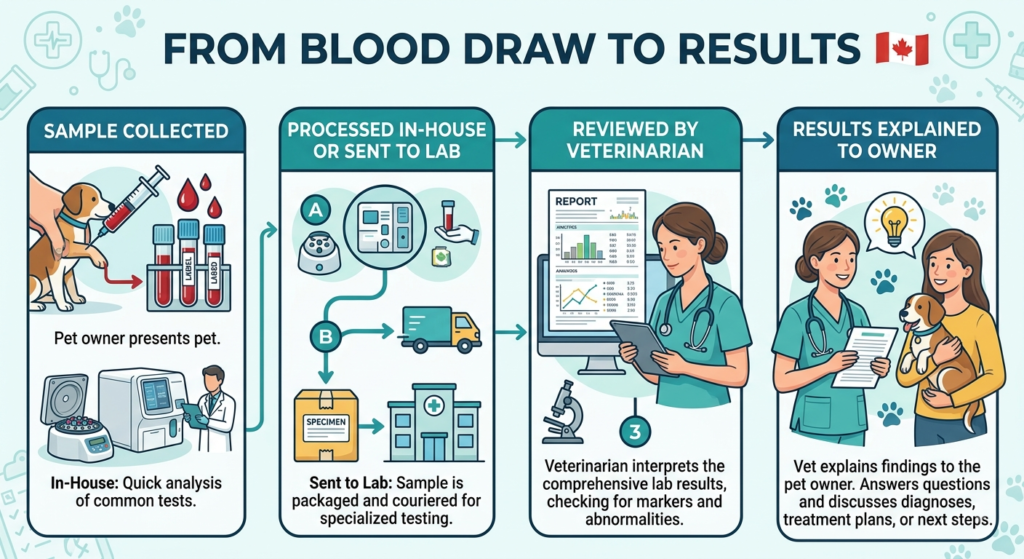
Once blood is drawn, one of two things happens depending on the test ordered. Many routine tests, including a basic complete blood count or chemistry panel, are processed with our in-house diagnostics equipment, which means results are often ready the same day. This matters most when your pet is showing symptoms and a fast answer changes what happens next.
More specialized panels, such as advanced hormone testing, specific infectious disease screening, or detailed pathology review, are sent out to a reference laboratory testing partner with equipment and specialists beyond what any single clinic keeps on-site. These results typically take one to a few business days, and your veterinary team will let you know what to expect when the sample is submitted.
Complete Blood Count (CBC): What It Measures
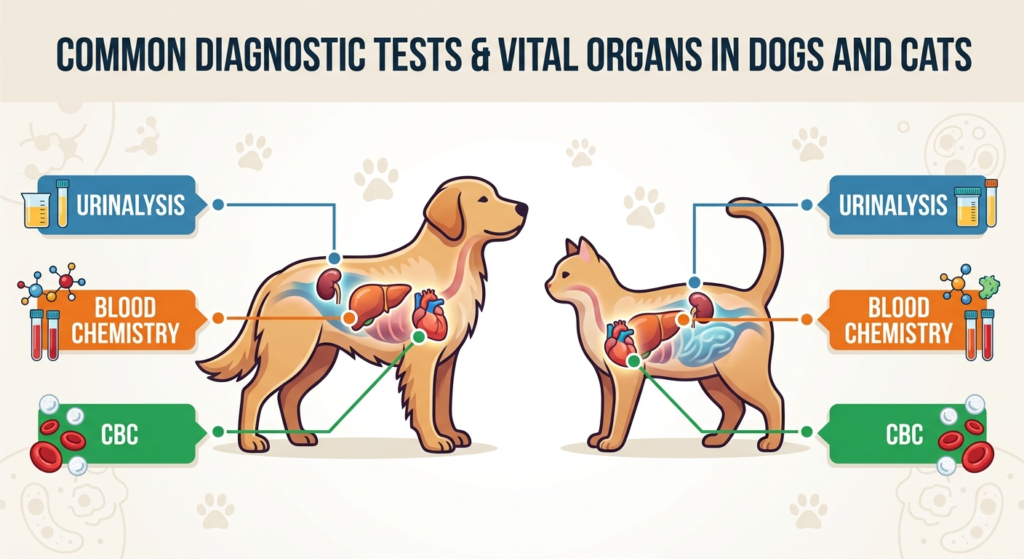
The CBC is one of the most commonly ordered tests, and it looks specifically at the cellular components of blood. According to the Merck Veterinary Manual, this panel measures red blood cells, white blood cells, and platelets, giving veterinarians a detailed look at oxygen-carrying capacity, immune response, and clotting ability.
In practical terms, a few key values tend to matter most:
- Red blood cells (RBC) and hemoglobin reflect how well blood is carrying oxygen, and low values often point to anemia
- White blood cells (WBC) rise with infection or inflammation and can drop with certain viral illnesses or bone marrow issues
- Platelets are responsible for clotting, and abnormal counts can signal bleeding disorders or immune-related conditions
A single abnormal value rarely tells the whole story on its own. Your veterinarian looks at the pattern across all three categories, alongside your pet’s history and physical exam findings, before drawing any conclusions.
For example, a dog with slightly low red blood cells and a normal white count might simply be recovering from a recent injury, while the same low red blood cell count paired with elevated white cells could point toward an active inflammatory process. Context changes the interpretation, which is part of why blood work is always read by a veterinarian rather than compared against a generic chart alone.
Blood Chemistry Panel: What Organ Function Values Mean
While the CBC looks at cells, the chemistry panel looks at organ function and metabolic health. This is where kidney values (BUN and creatinine), liver enzymes (ALT and ALP), blood glucose, and electrolytes show up on the report.
Kidney and liver values deserve particular attention because both organs can sustain significant damage before a pet shows any obvious symptoms. We see this connection often with dental disease specifically. Chronic oral infection allows bacteria to enter the bloodstream, and over time this can affect organ function in ways that show up clearly on a chemistry panel. We cover this relationship in more depth in our article on how dental disease affects the heart and kidneys.
The American Veterinary Medical Association notes that combining physical evaluation with tailored diagnostic testing gives veterinarians the clearest possible view of a pet’s overall risk, which is exactly what a chemistry panel is designed to support.
Urinalysis and Why It Is Often Paired with Blood Work
A urinalysis is frequently run alongside blood work, especially when kidney function is in question. Blood tests alone can miss early kidney disease, since values like creatinine may not rise until a significant portion of kidney function is already lost. Urine concentration, protein levels, and sediment findings help fill in that gap, often catching problems earlier than blood chemistry can on its own.
Serology testing, which looks for antibodies against specific infectious agents, sometimes rides along with a standard panel as well. This is common for heartworm and tick-borne disease screening, both of which the Companion Animal Parasite Council recommends testing for annually in most dogs, regardless of how much outdoor exposure they have.
Other Values You Might See Added to the Panel
Depending on your pet’s age, breed, and health history, a few additional tests are sometimes bundled into a standard blood panel rather than run on their own.
- Electrolytes such as sodium, potassium, and chloride help assess hydration status and are especially important for pets with vomiting, diarrhea, or kidney concerns
- Thyroid hormone (T4) is commonly checked in middle-aged and senior cats, since an overactive thyroid is one of the most frequent hormonal conditions seen in older cats, and in dogs where an underactive thyroid can affect weight, coat, and energy levels
- Pre-anesthetic panels are run before any procedure requiring sedation or general anesthesia, giving the veterinary team confidence that organ function can safely process anesthetic medications
- Pancreatic enzyme markers may be added when a pet shows signs of vomiting or abdominal discomfort, helping rule out or confirm pancreatitis
Not every pet needs every addition at every visit. Your veterinarian selects which values to include based on age, symptoms, breed predispositions, and whether the visit is a routine screening or a workup for a specific concern.
In-House Testing vs Reference Laboratory Testing: What’s the Difference
Not every test is processed the same way, and understanding the difference helps set expectations for turnaround time.
| Feature | In-House Testing | Reference Laboratory Testing |
|---|---|---|
| Turnaround | Often same-day | Typically one to several days |
| Best for | Routine CBC, chemistry, urgent cases | Specialized panels, pathology, hormone testing |
| Equipment | On-site clinic analyzers | External lab with advanced instrumentation |
| Typical use | Sick pet visits, pre-anesthetic screening | Chronic disease workups, referral cases |
Both approaches matter. Fast in-house results guide same-visit decisions, while reference lab testing provides depth that supports harder diagnostic questions.
Case Study: What a Set of Blood Work Results Looked Like
A composite example based on cases we see regularly: a nine-year-old cat came in for a routine senior wellness visit with no reported symptoms at home. Bloodwork run that day showed a mildly elevated BUN and a urine sample with slightly reduced concentration, both subtle findings on their own.
Individually, neither value would have raised much concern. Together, they pointed toward early kidney disease, a condition that often shows no outward symptoms until it has progressed significantly. Because the finding came from routine screening rather than a symptomatic visit, the family had time to adjust diet and start monitoring before any clinical signs appeared. This is the value of baseline testing described earlier in this guide: a single result rarely tells the story, but a pattern over time often does.
How to Read Your Report Without Panicking
A value flagged in red or marked “high” or “low” on a lab report does not automatically mean something serious is wrong. Reference ranges are built from population averages, and some healthy pets naturally sit slightly outside that range without any underlying issue. Stress during the visit, recent meals, hydration status, and even breed can all shift individual values.
This is part of why our team walks through the signs your pet needs preventive care alongside lab results, since context from home often explains a borderline number better than the number alone. If a result genuinely needs follow-up, your veterinarian will explain exactly why, what it could mean, and what the next step looks like.
Booking Blood Work for Your Pet
Whether your pet is due for routine screening or showing symptoms that warrant a closer look, our team approaches every panel with the same philosophy we describe in what preventive care for pets really means: catching problems early, explaining findings clearly, and building a plan around your pet’s specific needs. You can also see how results move through our lab in our behind-the-scenes look at our diagnostic centre.
If your pet is due for a wellness visit or you have questions about a previous report, you can book an appointment with our Brampton team.
Frequently Asked Questions
-
What is included in standard pet blood work?
Standard pet blood work usually includes a complete blood count, which measures red blood cells, white blood cells, and platelets, along with a chemistry panel that evaluates kidney and liver values, blood glucose, and electrolytes. Depending on your pet’s age and health history, your veterinarian may add a urinalysis or specific infectious disease screening to the standard panel.
-
How long does it take to get pet blood work results back?
Routine tests processed with in-house equipment are often ready the same day, sometimes within an hour. Specialized panels sent to an outside reference laboratory typically take one to several business days, depending on the complexity of the test. Your veterinary team will let you know the expected timeline when the sample is collected.
-
What do abnormal blood work results actually mean?
An abnormal result flags a value outside the typical reference range, but it does not automatically indicate serious disease. Some healthy pets naturally sit outside standard ranges, and factors like recent stress, hydration, or meals can shift individual numbers. Your veterinarian interprets abnormal findings alongside your pet’s history and physical exam before making any recommendations.
-
Does my pet need to fast before a blood test?
Fasting requirements depend on which tests are being run. Some panels, particularly those measuring blood glucose or certain lipid values, are more accurate after a period without food. Your veterinary team will tell you in advance if fasting is needed for your pet’s specific appointment, so always confirm before the visit.
-
How often should a healthy pet have blood work done?
Healthy adult pets typically benefit from annual blood work as part of a routine wellness visit. Senior pets, generally seven years and older, often move to twice-yearly testing since age-related conditions can progress more quickly. Pets managing a chronic illness may need more frequent monitoring based on their individual treatment plan.
-
Can blood work catch problems a physical exam misses?
Yes. Many internal conditions, including early kidney disease, liver dysfunction, diabetes, and certain infections, do not produce obvious physical symptoms until they have progressed. Blood work provides a window into organ function and cellular health that a hands-on exam alone cannot fully capture, which is why the two are typically used together.
A single lab report will not tell your pet’s whole story, but paired with regular screening, it often tells you the story early enough to act on it.