
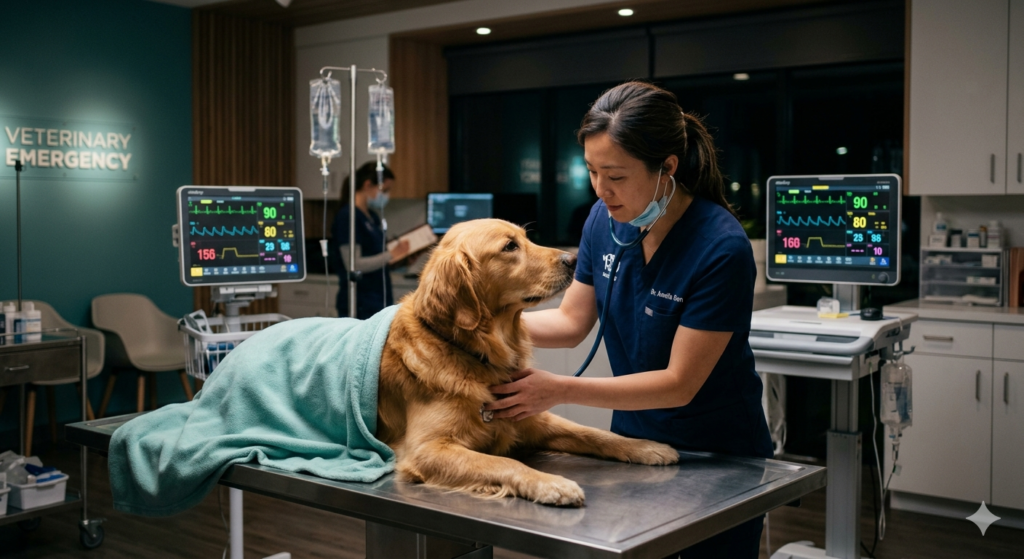
It was a regular Saturday evening last fall when a Brampton family noticed their two-year-old Labrador, Duke, suddenly collapse in the backyard. No warning signs. No prior health issues. Just a dog who had been chasing squirrels ten minutes earlier, now lying on the grass and struggling to breathe. They needed an emergency vet in Brampton, and they needed one fast. If you have ever been in a situation like that, you know the panic that floods your body. Your hands shake, your mind races, and the only question that matters is: where do I take my pet right now?
At Lacoste Animal Hospital, we see cases like Duke’s more often than most pet owners would expect. And the difference between a good outcome and a tragic one almost always comes down to how quickly the family acted and whether they knew what to look for.
This guide is built to help you recognize a genuine pet emergency, understand what happens during urgent veterinary care, and know exactly what steps to take before you even leave your driveway.
How to Tell if Your Pet Is Having a Real Emergency
Not every health scare requires a trip to the emergency vet. A mild limp or a skipped meal might be worth monitoring at home for a day. But certain symptoms demand immediate action. Delaying by even a few hours can turn a treatable condition into a life-threatening one.
Here are the situations that should send you straight to a veterinary emergency clinic:
- Difficulty breathing or choking sounds, including open-mouth breathing in cats
- Uncontrolled bleeding from a wound, the mouth, nose, or rectum
- Seizures lasting more than two minutes or multiple seizures in a short window
- Collapse or sudden inability to stand or walk
- Suspected poisoning from chocolate, xylitol, antifreeze, rodent bait, lilies (for cats), or any household toxin
- Bloated or distended abdomen, especially in large-breed dogs, which can indicate gastric dilatation-volvulus (GDV)
- Trauma from being hit by a car, falling from a height, or an animal attack
- Straining to urinate for more than 12 hours, particularly in male cats (urinary blockage can be fatal within 24 to 48 hours)
- Persistent vomiting or diarrhea with blood, or lasting more than 24 hours without improvement
- Sudden blindness, disorientation, or head tilting
If you see any of these signs, do not wait. Call your emergency and urgent care clinic immediately and head in.
The American Veterinary Medical Association recommends that pet owners keep their veterinarian’s emergency contact number saved in their phone at all times, right alongside their own doctor’s number.
The Most Common Pet Emergencies We Treat in Brampton
Brampton is a growing city, and with more families comes a larger pet population. At our clinic, certain emergencies show up more often than others. Understanding what they look like can shave critical minutes off your response time.
Toxin Ingestion
Dogs explore the world with their mouths. We regularly see cases involving chocolate, grapes, medications left on countertops, and cannabis edibles. Cats are more commonly affected by household plants like lilies, which can cause acute kidney failure from even brief exposure. If you suspect your pet has eaten something toxic, call the Pet Poison Helpline and bring the product packaging with you to the clinic.
Gastric Dilatation-Volvulus (Bloat)
This condition mostly affects deep-chested breeds like Great Danes, German Shepherds, and Standard Poodles. The stomach fills with gas and twists on itself, cutting off blood supply. Without emergency surgery, bloat is fatal. Signs include a hard, swollen belly, unproductive retching, restlessness, and excessive drooling. This is one of the few emergencies where every single minute counts.
Trauma and Hit-by-Car Injuries
Pets that escape through open doors or unsecured yards are vulnerable to vehicle strikes. Even if a pet appears fine after a collision, internal bleeding, organ damage, or pelvic fractures can develop within hours. Always bring a pet in for assessment after trauma, even if they seem to be walking normally.
Urinary Blockages
Male cats are especially prone to urinary obstructions. A blocked cat cannot urinate, and toxins build up in the bloodstream rapidly. Warning signs include frequent trips to the litter box with little or no urine output, crying while trying to urinate, and licking the genital area excessively. According to the Canadian Veterinary Medical Association, urinary blockages are one of the top emergency presentations in feline medicine across the country.
Respiratory Distress
Sudden difficulty breathing can result from heart failure, pneumonia, an allergic reaction, or an obstruction in the airway. Brachycephalic breeds like Bulldogs and Pugs are at higher risk, but respiratory emergencies can happen to any pet. Open-mouth breathing in a cat is always a red flag.
What Happens When You Arrive at an Emergency Vet Clinic
Walking into a veterinary emergency room for the first time can feel overwhelming. Here is exactly what to expect so you can focus on supporting your pet instead of worrying about the process.
Step 1: Triage Assessment
A veterinary technician will evaluate your pet within minutes of arrival. They check vital signs, assess pain levels, and determine the severity of the situation. Pets in critical distress are moved to treatment immediately. This is similar to how a human emergency room operates, where the most urgent cases are seen first regardless of arrival order.
Step 2: Stabilization
Before running any tests, the team focuses on keeping your pet alive and comfortable. This might involve IV fluids, oxygen supplementation, pain management, or anti-nausea medication. Stabilization is the foundation that every other decision builds on.
Step 3: Diagnostic Workup
Once your pet is stable, the veterinarian orders diagnostics to figure out what is happening internally. At Lacoste Animal Hospital, this happens on-site with our in-house diagnostics lab, meaning bloodwork, urinalysis, and biochemistry panels come back within minutes rather than days. For imaging needs like fracture assessment or internal organ evaluation, our in-house medical imaging suite provides digital radiographs and ultrasound on the spot. You can read more about how this speed directly impacts outcomes in our post on why fast veterinary diagnostics save lives.
Step 4: Treatment Plan and Communication
Your vet will sit down with you, explain the diagnosis, walk you through the treatment options, and give you an honest assessment of prognosis. At a locally owned clinic, this conversation happens with the same doctor who treated your pet, not a rotating roster of unfamiliar faces.
Step 5: Surgery or Continued Monitoring
Some emergencies require pet surgery, such as foreign body removal, wound repair, or GDV correction. Others need close monitoring with fluid therapy and medication adjustments over several hours. If your pet does need an emergency surgical procedure, our team has the training and equipment to move quickly. For more detail on surgical recovery, we have covered that in depth in our guide to common dog surgeries in Brampton.
A Friday Night That Every Pet Owner Should Learn From
Case Study: Duke, a 2-Year-Old Labrador Retriever
Duke arrived at Lacoste Animal Hospital on a Saturday evening after collapsing in his family’s backyard. His gums were pale, his heart rate was dangerously elevated, and his abdomen was tense to the touch. Within eight minutes of arrival, our team had started IV fluids, drawn emergency bloodwork, and run abdominal radiographs. The imaging revealed a splenic mass that had ruptured, causing internal bleeding. Duke went into emergency surgery within 40 minutes of walking through the door. The mass was removed, the bleeding was controlled, and Duke was recovering in our care suite by midnight. Two weeks later, he was back to chasing squirrels.
Duke’s family did two things right: they recognized the emergency immediately, and they did not waste time searching the internet for answers. They called ahead, drove straight in, and let the team take over.
Emergency Vet vs. Walk-In Vet Clinic: Know the Difference
One of the biggest points of confusion for pet owners is understanding when to visit an emergency vet versus scheduling a walk-in or same-day appointment. Here is a straightforward comparison.
| Factor | Emergency Vet Visit | Walk-In or Same-Day Appointment |
|---|---|---|
| When to go | Life-threatening symptoms, trauma, poisoning, collapse | Non-urgent issues that still need attention today |
| Examples | Seizures, GDV, uncontrolled bleeding, respiratory distress | Mild vomiting, limping, ear infections, minor wounds |
| Triage priority | Immediate assessment and stabilization | Seen in order of arrival or appointment slot |
| Diagnostics needed | Emergency bloodwork, imaging, monitoring | Standard exam, possibly basic labwork |
| Typical timeline | Treatment begins within minutes | May wait 30 to 60 minutes depending on volume |
If you are unsure which category your pet falls into, call the clinic. A quick phone conversation with the veterinary team can help you decide whether to come in immediately or schedule a visit for the next available slot.
How to Prepare for a Pet Emergency Before It Happens
The best time to prepare for an emergency is when nothing is wrong. Here are steps every Brampton pet owner should take today.
Build a pet first-aid kit. Include gauze, adhesive tape, hydrogen peroxide (for vet-directed vomiting only), a digital thermometer, a blanket, and a muzzle. Even the friendliest dog may bite when they are in pain.
Save your vet’s number in your phone. Program the clinic number, (905) 913-8888, into your contacts now. When your pet is bleeding on your kitchen floor is not the time to be searching online.
Know the route. Lacoste Animal Hospital is located at 117, 50 Lacoste Blvd, Brampton, ON. Map it out ahead of time so you are not relying on GPS under stress.
Keep a pet file at home. A simple folder with your pet’s vaccination records, medication list, and recent lab results helps the emergency vet team move faster. The Ontario SPCA recommends keeping this file near your pet’s carrier or leash for grab-and-go access.
Invest in regular checkups. Many emergencies are actually preventable conditions that went undetected. Routine wellness and preventive care visits catch issues like heart murmurs, early kidney disease, and dental infections long before they become crises. The ASPCA emphasizes that annual exams reduce emergency visits by catching problems early.
Why Brampton Families Choose Lacoste for Emergency Veterinary Care
When an emergency vet near me search pops into your head at 9 PM on a Friday, you need to know that the clinic on the other end of the phone actually has the staff, equipment, and experience to help. Here is what sets Lacoste Animal Hospital apart for urgent and emergency cases in Brampton.
On-site diagnostics that deliver same-visit answers. We do not send bloodwork to an outside lab and ask you to wait two days for results. Our in-house laboratory and imaging suite mean we can diagnose and begin treatment in the same visit.
Extended hours when other clinics are closed. We are open six days a week with extended evening availability, including weekends. That coverage fills a real gap in Brampton where many veterinary clinics close by 5 or 6 PM.
A small team that knows your pet. Because we are locally owned and operated under Dr. Shalu Sheria, you are not cycling through a different veterinarian every visit. Continuity matters, especially when your pet has a medical history that affects emergency treatment decisions.
Full surgical capability. If your pet needs emergency surgery, we handle it in-house. No transfers across the city in the middle of the night.
Frequently Asked Questions About Emergency Veterinary Care in Brampton
-
What qualifies as a pet emergency versus an urgent but non-critical issue?
A true emergency involves life-threatening symptoms like collapse, uncontrolled bleeding, seizures, difficulty breathing, or suspected poisoning. Urgent but non-critical issues include persistent vomiting without blood, moderate limping, or ear infections. When you are unsure, calling your brampton emergency vet clinic for guidance is always the safest choice rather than waiting to see if symptoms resolve on their own.
-
Should I call ahead before driving to an emergency vet in Brampton?
Yes. Calling ahead allows the veterinary team to prepare the treatment room, pull any relevant medical records, and give you first-aid instructions for the car ride. Even a two-minute phone call before you leave home helps the team start stabilization faster once your pet arrives. Call Lacoste Animal Hospital at (905) 913-8888 on your way in.
-
Can I walk in for emergency veterinary care or do I need an appointment?
Lacoste Animal Hospital accepts walk-in emergency cases during operating hours. No appointment is required for genuine emergencies. The team performs triage on arrival and prioritizes patients based on the severity of their condition. For non-emergency concerns that still need attention the same day, calling ahead helps manage wait times so your pet is seen as quickly as possible.
-
What should I bring when rushing my pet to an emergency vet clinic?
Bring your pet’s vaccination records if you have them handy, any medications they are currently taking, and details about what happened. If poisoning is suspected, bring the product packaging or a photo of the label. A familiar blanket or towel can help keep your pet calm during transport. Having your pet’s medical history available saves the emergency veterinary team valuable time during assessment.
-
How much does an emergency vet visit in Brampton typically involve?
Every emergency is different, so treatment plans vary based on the diagnosis and severity. The veterinarian will discuss all recommended diagnostics and treatments with you upfront, including estimated costs, before proceeding. There are no surprise charges. Ask about payment options when you arrive. The focus is always on transparent communication so you can make informed decisions about your pet’s care without pressure.
-
How can I reduce the risk of pet emergencies happening in the first place?
Regular veterinary checkups catch developing problems before they become crises. Keeping toxic foods, medications, and household chemicals out of reach is essential. Staying current on vaccinations and parasite prevention protects against infectious disease emergencies. Proper leash control and secure fencing prevent trauma from vehicle strikes. Building a relationship with a trusted veterinarian through routine visits means your pet’s baseline health is already documented if an emergency does occur.
If your pet is showing signs of distress right now, do not wait. Call Lacoste Animal Hospital at (905) 913-8888 or drive directly to 117, 50 Lacoste Blvd, Brampton, ON. We are here to help.