
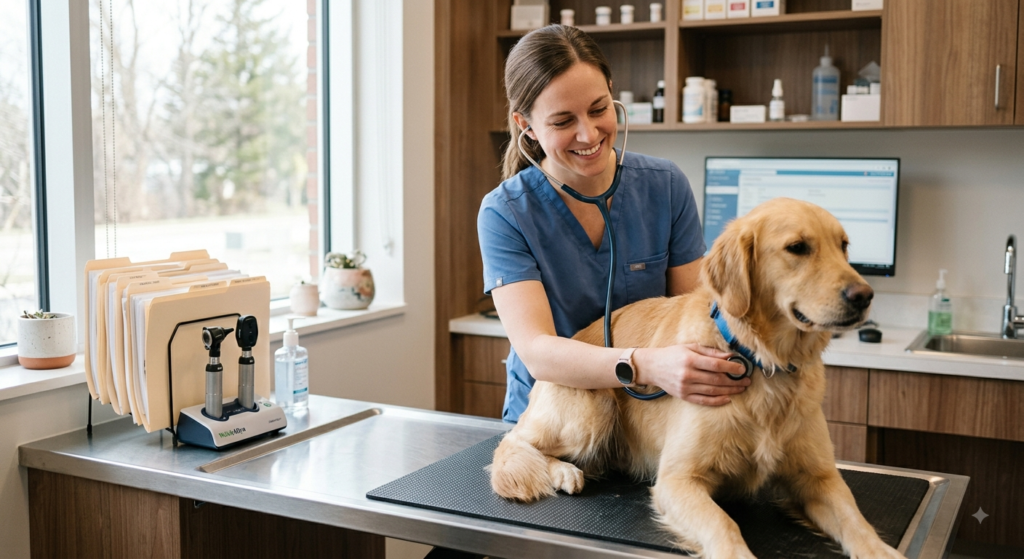
If you have ever sat in an exam room watching your veterinarian check your dog’s ears, press gently on his belly, and peer into his mouth, you have probably wondered what all that poking and looking is actually for. A pet wellness exam looks simple from the outside, but every step is designed to catch something you cannot see on your own. At Lacoste Animal Hospital in Brampton, our veterinarians treat every wellness visit as a full investigation into your pet’s health, not a formality between vaccines.
This guide walks through what actually happens during a comprehensive pet exam, why each step matters, and how often your dog or cat should be seen. By the end, you will understand why a proper wellness exam is one of the most valuable things you can do for your pet’s long-term health.
Why a Pet Wellness Exam Matters More Than You Think
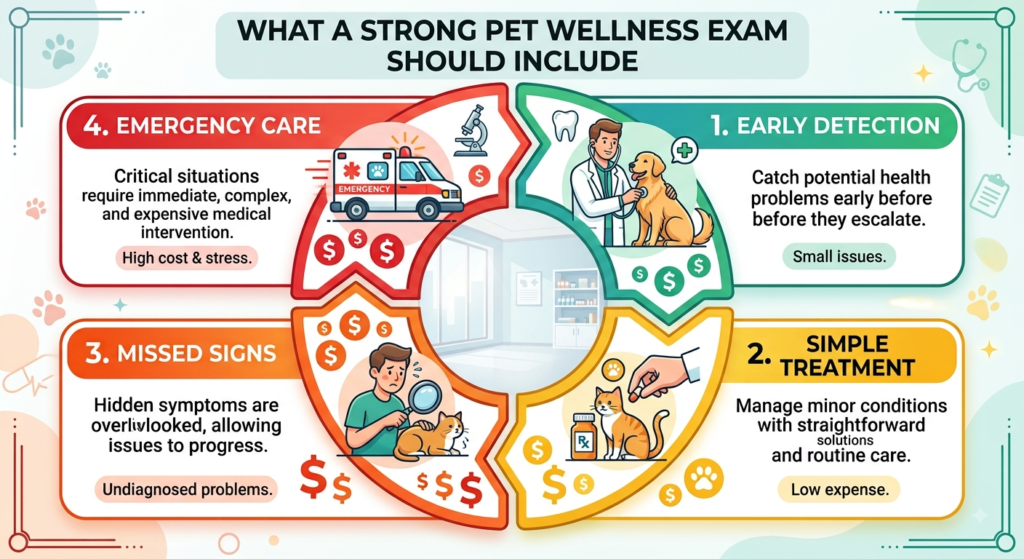
Dogs and cats are experts at hiding pain. It is an instinct left over from their wild ancestors, who could not afford to look weak in front of predators or rivals. That instinct means a pet can be dealing with early kidney disease, a slipping joint, or a heart murmur for months before you notice anything different at home.
A wellness exam closes that gap. Our pet wellness and preventive care program is built around catching those quiet changes early, when treatment is simpler and far less stressful for everyone involved. We go into more depth on the philosophy behind this approach in our article on what preventive care for pets really means, but the short version is this: prevention is cheaper, gentler, and more effective than reacting after a problem has already taken hold.
Before the Exam Begins: What Happens at Check-In
A thorough wellness exam actually starts before the veterinarian walks in. Our technicians record your pet’s weight, temperature, heart rate, and respiratory rate, all of which become part of a running health history that helps us spot trends over several years, not just one visit.
This is also when we ask about anything you have noticed at home. Has your cat been drinking more water than usual? Is your dog slower to get up in the morning? Has appetite changed? These small observations from you are often just as valuable as anything a vet finds during the physical check, because you know your pet’s normal behaviour better than anyone in the room.
The Physical Examination, Nose to Tail
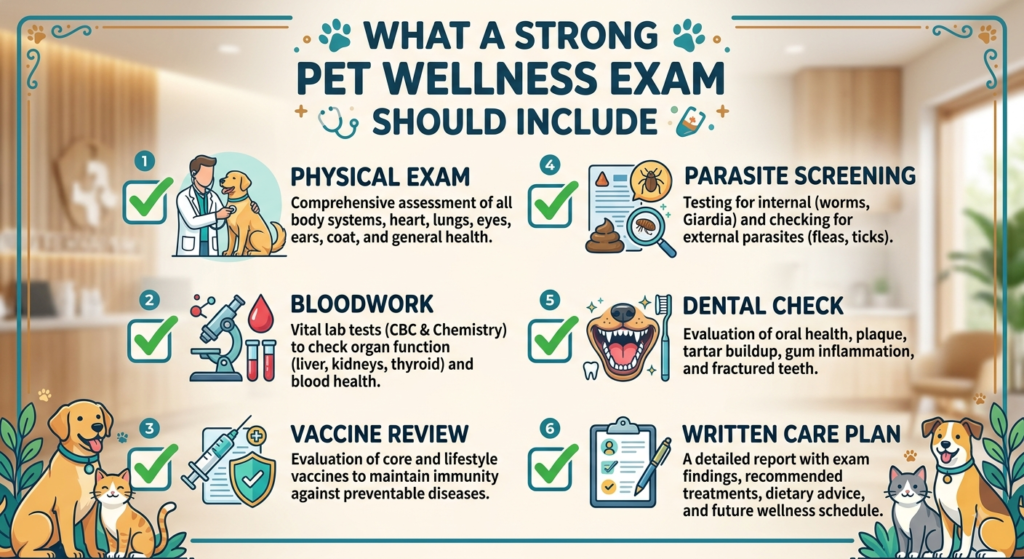
This is the heart of the visit. A comprehensive pet exam covers far more ground than most owners expect, and our veterinarians move through it in a consistent order so nothing gets missed.
During the hands-on portion, your vet typically checks:
- Eyes and ears for cloudiness, discharge, redness, or signs of infection
- Mouth and teeth for tartar buildup, gum inflammation, and broken teeth
- Skin and coat for lumps, parasites, dryness, or hair loss patterns
- Heart and lungs, listened to with a stethoscope for murmurs or irregular rhythm
- Abdomen, gently palpated to feel organ size and detect discomfort
- Joints and gait, watched and manipulated to catch early arthritis or mobility loss
- Lymph nodes, checked for swelling that can signal infection or illness
Many of the issues caught during this stage line up with the patterns we describe in our post on signs your pet needs preventive care, which covers the subtle behavioural and physical clues owners tend to overlook.
Bloodwork and Diagnostic Screening
A physical exam tells us a lot, but some conditions hide beneath the surface entirely. That is where diagnostic testing comes in. Depending on your pet’s age and risk factors, your veterinarian may recommend bloodwork, a urinalysis, or fecal testing to check organ function, screen for infection, and rule out silent disease.
Because our clinic runs in-house diagnostics, many of these results are available the same day, which means we can discuss findings with you before you even leave the building. For more specialized panels, we work with reference laboratory testing partners to get detailed answers on anything our in-house equipment cannot cover.
According to the American Veterinary Medical Association, preventive healthcare that combines physical evaluation with tailored diagnostic recommendations gives veterinarians the clearest possible picture of a pet’s overall risk, rather than relying on a physical check alone.
Vaccinations and Parasite Prevention During the Visit
Wellness visits are also when we review and update your pet’s vaccination schedule. Core vaccines protect against the most serious and widespread diseases, while lifestyle vaccines are added based on factors like boarding, outdoor access, or travel. The American Animal Hospital Association publishes detailed protocols that guide how veterinarians across North America time these vaccines and boosters.
Parasite prevention gets the same individualized attention. Ontario’s climate supports fleas, ticks, and intestinal parasites for much of the year, and risk shifts with the seasons. We break this down further in our seasonal parasite risk guide for Brampton pets, which explains when local risk tends to climb. The Companion Animal Parasite Council recommends year-round prevention and routine fecal testing for most pets, regardless of how much time they spend outdoors, since exposure can happen in a backyard as easily as on a hiking trail.
Dental Checks: The Piece Many Owners Miss
Dental disease is one of the most common findings during a wellness exam, and one of the most overlooked by pet owners. Tartar buildup and gum inflammation rarely cause obvious symptoms early on, but left untreated, oral bacteria can eventually affect the heart, kidneys, and liver. We cover this connection in detail in our article on how dental disease affects the heart and kidneys.
During your pet’s exam, the veterinarian checks for tartar, gum recession, loose or fractured teeth, and bad breath that goes beyond normal “dog breath.” If a cleaning or extraction is needed, we will walk you through the recommendation and answer any questions before scheduling anything.
Comprehensive Exam vs Quick Checkup: What’s the Difference
Not every visit to a vet clinic is the same, and it helps to know what separates a full wellness visit from a fast, symptom-focused checkup.
| Feature | Comprehensive Wellness Exam | Quick Symptom Checkup |
|---|---|---|
| Purpose | Full-body preventive assessment | Address one specific concern |
| Physical exam | Nose-to-tail, every system checked | Focused on the affected area |
| Bloodwork | Often recommended as a baseline | Only if directly relevant |
| Vaccine review | Included as standard practice | Usually not addressed |
| Parasite screening | Included | Rarely included |
| Best for | Annual checkups, puppies, seniors | Sudden limping, vomiting, minor injuries |
If your pet is due for their annual visit, a comprehensive exam gives our veterinarians the full picture. If something specific just came up, a focused checkup gets you seen faster for that one issue.
Inside a Real Wellness Visit: A Case Study
A composite example based on cases we regularly see: a seven-year-old mixed-breed dog was brought in for a routine annual exam. The owner mentioned nothing unusual at home, aside from the dog seeming “a bit more tired lately,” which they had chalked up to the summer heat.
During the physical exam, our veterinarian noted slightly pale gums and a faint heart murmur that had not been present the year before. Bloodwork run the same day showed early changes in kidney values, well before the dog showed any classic symptoms like increased thirst or weight loss. Because the finding came from a scheduled wellness visit rather than an emergency trip, the family had time to adjust diet, start supportive treatment, and schedule regular monitoring instead of facing a crisis.
This is the outcome preventive care is built around. Nothing dramatic happens in the exam room itself, just a careful, methodical process that catches problems while they are still manageable.
How Often Your Pet Needs a Wellness Exam
Frequency depends heavily on age and health status. As a general guideline:
- Puppies and kittens need a series of visits during their first year for vaccines, deworming, and developmental checks
- Adult pets between one and six years old should have an annual pet exam covering a full physical, vaccine updates, and parasite screening
- Senior pets, generally seven years and older, benefit from wellness visits twice a year, since age-related conditions can progress quickly between annual checkups
Pets managing a chronic condition, recovering from surgery, or showing early warning signs may need more frequent monitoring, as recommended by your veterinarian.
Finding a Pet Wellness Exam Near Me in Brampton
If you are searching for a pet wellness exam near me, look for a clinic that treats these visits as more than a quick vaccine stop. A strong wellness program should include a full physical exam, access to same-day diagnostics, and a veterinarian willing to explain findings in plain language rather than rushing through the appointment.
Our team also has digital imaging and ultrasound on-site, which becomes useful when a physical exam or bloodwork points to something that needs a closer look. You can get a sense of how our diagnostic process actually works in our behind-the-scenes look at our diagnostic centre.
What to Expect After the Visit
Once the exam wraps up, you should leave with a clear summary of what was found, not just a bill and a receptionist waving goodbye. Our veterinarians walk owners through every result, explain what any recommended follow-up involves, and outline a personalized care plan covering upcoming vaccine boosters and prevention doses.
If anything requires further attention, whether that is a referral for imaging, a recheck in a few weeks, or a conversation about diet changes, that plan is written down so nothing gets lost between visits. Preventive care works best as an ongoing partnership, not a once-a-year event that ends the moment you walk out the door. If your pet is due for a visit, you can book a wellness exam with our Brampton team.
Frequently Asked Questions
-
What is included in a standard pet wellness exam?
A standard pet wellness exam includes a full nose-to-tail physical check, weight and vitals tracking, a review of vaccination status, and a discussion of parasite prevention needs. Depending on your pet’s age and history, your veterinarian may also recommend bloodwork, a urinalysis, or fecal testing to screen for conditions that do not show obvious outward symptoms yet.
-
How is a comprehensive pet exam different from a regular checkup?
A comprehensive pet exam evaluates every major body system, from heart and lungs to joints and skin, and often includes diagnostic screening as a baseline. A regular checkup usually focuses on one specific concern, such as a limp or upset stomach, rather than assessing overall health. Annual wellness visits are meant to be comprehensive, while symptom visits are more targeted and quicker.
-
How often should my dog or cat have a wellness exam?
Healthy adult dogs and cats generally need one wellness exam per year. Puppies and kittens require a series of visits during their first year, and senior pets aged seven and older typically benefit from exams every six months. Pets with ongoing health conditions may need more frequent monitoring based on their specific treatment plan and response.
-
Does a pet wellness exam include bloodwork automatically?
Bloodwork is not always automatic, but it is commonly recommended, especially for senior pets, pets showing subtle symptoms, or animals due for anesthesia. Baseline bloodwork gives veterinarians a reference point for future visits, making it easier to spot small but meaningful changes over time. Your veterinarian will explain why testing is or is not recommended for your specific pet.
-
What should I tell my vet before a wellness exam?
Mention any changes you have noticed, even small ones, such as shifts in appetite, water intake, energy level, bathroom habits, or behaviour. These details often guide which parts of the exam or which tests deserve extra attention. Bringing a written list can help if you tend to forget details once you are in the exam room.
-
Can a wellness exam catch diseases before symptoms appear?
Yes. Many serious conditions, including kidney disease, diabetes, and certain cancers, progress silently before a pet shows any visible signs. Combining a physical exam with routine bloodwork and urinalysis allows veterinarians to detect early changes in organ function, giving pets a much better chance at successful treatment compared to catching the same condition after symptoms have already developed.
A pet wellness exam is not a formality, it is the single habit most likely to add healthy years to your companion’s life.