
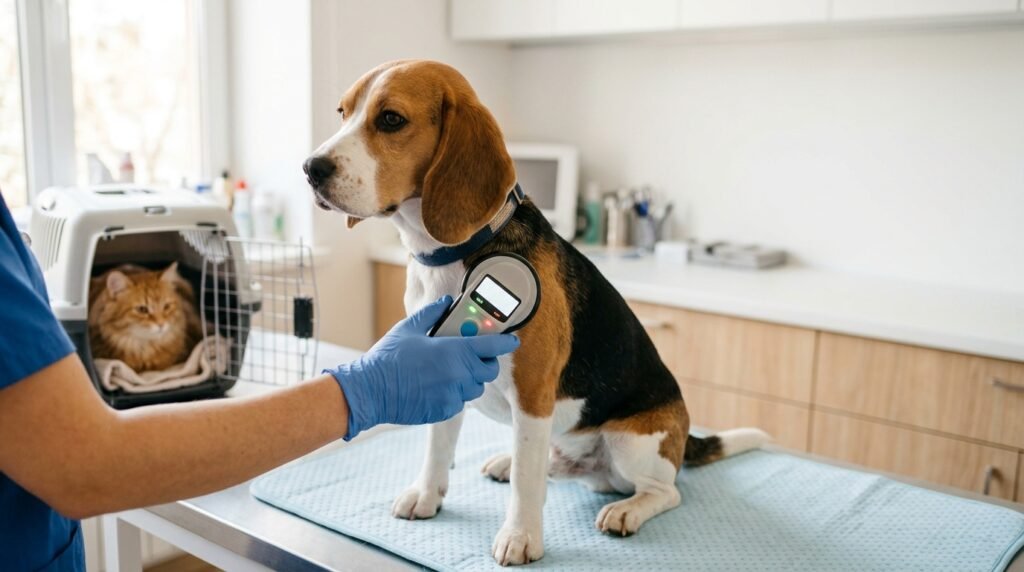
Pet microchipping is one of the simplest things you can do to protect your dog or cat, and one of the most overlooked until the day a gate is left open. A microchip is a permanent form of ID that cannot fall off, fade, or get lost, and it gives shelters and clinics a reliable way to get a lost pet back home. If you have been looking for a trusted vet near me in Brampton to chip a new puppy, kitten, or adopted adult pet, this guide covers how the chip works, what the appointment involves, how microchip registration in Canada works, and the mistakes that stop chipped pets from getting home.
What Is a Pet Microchip?
A pet microchip is a tiny electronic transponder, roughly the size of a large grain of rice, sealed inside biocompatible glass. It sits just under the skin, usually between the shoulder blades, and stays there for the life of the pet.
The chip has no battery and no moving parts. It does nothing at all until a scanner passes over it. The scanner sends out a low-power radio signal, the chip wakes up, and it sends back a unique identification number. That number is the whole story. The chip does not store your name, your address, or your pet’s medical history.
The American Veterinary Medical Association puts it plainly: the chip only holds an ID number, so the contact details linked to that number in a registry are what actually bring a pet home.
ISO Microchips and Why the Standard Matters
Not all chips use the same frequency. The international standard, known as ISO 11784/11785, uses a 15-digit number read at 134.2 kHz. The Canadian Veterinary Medical Association supports permanent identification of companion animals with microchips that meet ISO standards.
Choosing an ISO chip matters for two reasons:
- Readability: Universal scanners used by shelters and clinics read ISO chips reliably.
- Travel: Many countries, including those in the European Union, require an ISO-compliant chip for pets entering the country.
How Pet Microchipping Works, Step by Step
The procedure is quick and does not require surgery or anesthesia for most pets.
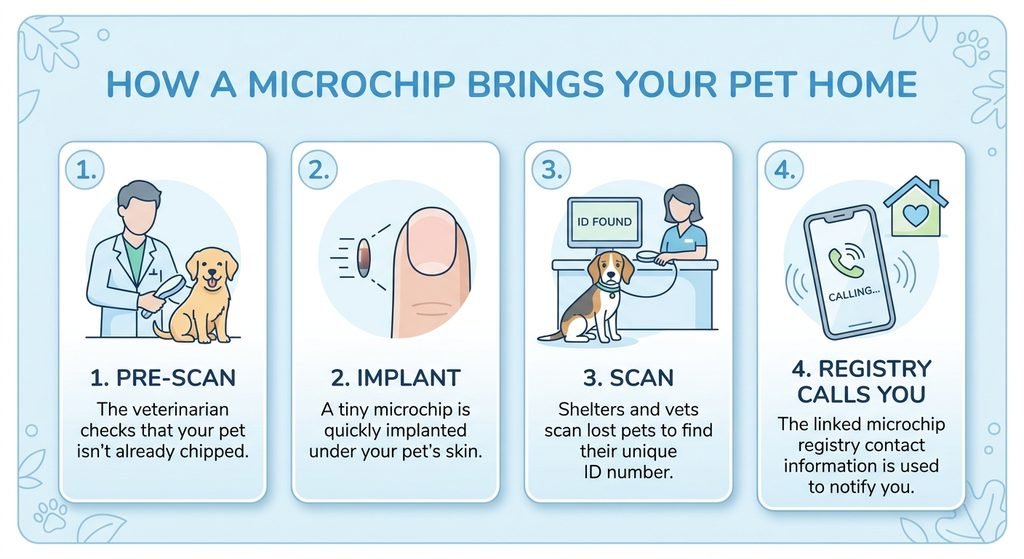
1. Pre-Scan
Your veterinary team first scans your pet to check for an existing chip. This is especially important for rescue and rehomed pets, who may already have one from a shelter or previous owner.
2. Implantation
The chip comes preloaded in a sterile, single-use applicator. The vet lifts a small fold of loose skin between the shoulder blades and places the chip underneath with one quick motion. The needle is a bit larger than the one used for vaccines, so most pets react about the same way they do to a routine shot: a brief flinch, then back to sniffing for treats.
3. Post-Scan
The team scans again right away to confirm the chip is in place and reading correctly. The chip number is recorded in your pet’s medical file.
4. Registration
This is the step that makes the chip useful. Your contact details are linked to the chip number in a registry database. Without registration, a scanned chip leads nowhere.
The whole visit usually takes a few minutes, and it can be done during a regular exam, at a vaccine appointment, or while your pet is already under anesthesia for another procedure.
Why Every Pet Needs a Microchip
Collars and Tags Come Off
Collars break, slip over heads, and get pulled off on fences. Tags wear down until the phone number is unreadable. A microchip is the backup that stays put no matter what happens to the collar.
The Research on Return Rates
The most widely cited study on this topic, published in the Journal of the American Veterinary Medical Association, followed 7,704 microchipped animals entering 53 shelters. The findings are hard to ignore:
- Microchipped stray dogs went home 52.2% of the time, compared with 21.9% for stray dogs overall
- The return rate for microchipped cats was about 20 times higher than for stray cats overall
- Shelters found the owners of 72.7% of microchipped animals
The same study also showed where things go wrong. When owners could not be found, the biggest reason was an incorrect or disconnected phone number, followed by owners who did not respond to calls or letters. Only 58.1% of chips checked against a registry were actually registered.
The lesson is simple: the chip works when the registration is current.
Indoor Cats Need One Too
Indoor cats escape more often than most owners expect, usually through an open door, a torn window screen, or during a move. Because many indoor cats do not wear collars, a cat microchip is often their only form of ID. A frightened indoor cat outside for the first time tends to hide nearby, and when a neighbour finally brings it to a clinic or shelter, a quick scan can solve the mystery.
Proof of Ownership
A registered chip number tied to your name can help settle ownership disputes over a found or rehomed pet. It also gives you a verified record for travel paperwork, boarding, and licensing.
Local Requirements in Brampton
Under Brampton’s Animal Services By-law, all dogs and cats in the city must be licensed. The City of Brampton pet licence application includes a field for your pet’s microchip number, and the City notes that keeping licence details up to date is what helps Animal Services get a lost pet home. A licence tag and a microchip work best together: the tag is visible to anyone, and the chip is permanent.
Microchip vs. ID Tag vs. GPS Tracker
These three tools solve different problems. Most owners get the best protection by combining them.
| Feature | Microchip | ID Tag / City Licence Tag | GPS Tracker |
|---|---|---|---|
| Permanent | Yes, lasts the pet’s lifetime | No, can fall off or wear down | No, attaches to collar |
| Visible to anyone | No, needs a scanner | Yes | No |
| Shows live location | No | No | Yes |
| Needs charging | No | No | Yes |
| Proof of ownership | Yes, when registered | Limited | No |
| Works if collar is lost | Yes | No | No |
| Best use | Permanent backup ID | Fastest return by a neighbour | Tracking a dog that bolts |
Dog Microchip vs. Cat Microchip: What Differs?
The chip itself is the same for dogs and cats. The situations around it are not.
| Consideration | Dogs | Cats |
|---|---|---|
| Most common way pets get lost | Bolting through gates, fireworks, off-leash running | Slipping out doors, windows, or during moves |
| Collar habits | Usually wear a collar and tags | Often wear no collar, especially indoors |
| Typical timing for chipping | Puppy vaccine visits or spay/neuter | Kitten visits or spay/neuter |
| Why it matters most | Dogs travel far, fast | Cats hide, and may be found days later |
| Extra protection | GPS collar for runners | Breakaway collar with ID tag |
When Should You Microchip Your Pet?
There is no wrong time, but some moments make it especially easy.
- At a puppy or kitten visit: Many owners chip during early vaccine appointments.
- During spay or neuter surgery: If your pet is booked for spay and neuter surgery, the chip can be placed while they are already asleep.
- After adoption: Scan first, then update or add a chip as needed.
- Before travel or a move: Moving is one of the riskiest times for escapes.
- At any routine visit: Adult and senior pets can be chipped at any age.
Microchipping is part of our pet wellness and preventive care services, so it fits easily alongside vaccines, parasite prevention, and annual checkups.
Microchip Registration in Canada: What Owners Need to Know
Canada does not have one single government microchip database. Instead, chips are registered through the registry linked to the chip’s manufacturer, and some shelters and rescue groups keep their own records too. That makes a few habits important.
Register Right Away
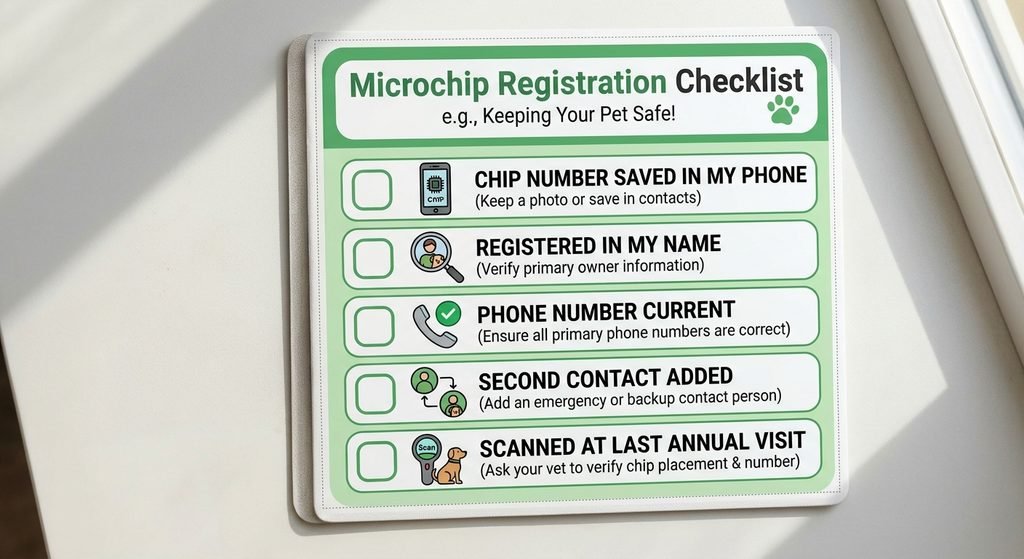
Do not leave the clinic assuming registration happens on its own. Confirm whether the clinic submits your details or whether you need to complete it yourself, and finish it the same day.
Transfer Ownership After Adoption or Purchase
If your pet came from a breeder, shelter, or previous owner, the chip may still be registered to them. Contact the registry and transfer the record into your name.
Keep Your Details Current
Update the registry when you change your phone number, move, or get a new email. Add a secondary contact, such as a family member, in case you cannot be reached.
Look Up an Unknown Chip
If you know the chip number but not the registry, the AAHA Universal Pet Microchip Lookup can show which participating registry holds the record.
Ask for a Scan Every Year
Chips rarely fail or move, but it happens. A quick scan during your pet’s annual pet wellness exam confirms the chip still reads and is a good reminder to check your registry details.
Common Myths About Pet Microchipping
“A microchip lets me track my pet.” It does not. A microchip has no GPS and no battery. It only shares an ID number when scanned. For live location, you need a GPS collar.
“It’s a painful procedure.” For most pets it feels about like a vaccine. Anesthesia is not needed, though it can be combined with a procedure where your pet is already sedated.
“My pet stays indoors, so it doesn’t need one.” Indoor pets are often the least prepared when they get out, because they may not wear a collar.
“Once it’s in, I’m done.” Registration and updates are what make the chip work. An unregistered chip is just a number.
“Chips cause health problems.” Complications such as chip migration or swelling at the site are uncommon, and reports of more serious reactions are rare. Your veterinarian can talk through any concerns specific to your pet.
Case Study: How Microchips Play Out in Real Life
The scenarios below are composites based on common situations seen in veterinary practice. They do not describe any specific patient or family.
Scenario 1: The indoor cat who slipped out. A cat with no collar escapes during a home renovation. A neighbour finds it hiding under a deck three days later and brings it to a local clinic. A scan reveals a chip registered with the owner’s current phone number, and the family is called within minutes.
Scenario 2: The dog chipped by a breeder. A young dog gets loose during a walk and is taken to a shelter. The chip scans, but it is still registered to the breeder, who has changed numbers. It takes extra days of calls before the dog is matched to its family. A two-minute registry transfer at adoption would have avoided the wait.
Scenario 3: The family that moved. A dog chipped years earlier goes missing after a move to a new neighbourhood. The chip is registered, but to an old address and a cancelled phone line. The family eventually finds the dog through social media posts, not the chip.
The pattern is the same in all three: the chip did its job. Whether the pet got home quickly depended on the registration.
Why Brampton Pet Owners Choose Lacoste Animal Hospital
Our team scans every new patient, places ISO-standard microchips, records the chip number in your pet’s file, and walks you through registration before you leave. We also check the chip during annual visits so you are not left guessing whether it still works. Pet owners across Brampton have given Lacoste Animal Hospital a 4.6-star Google rating across more than 400 reviews, with many noting how gentle and patient the team is with nervous pets.
Whether you are searching “chip my dog near me” for a new puppy or want a cat microchip added at your next visit, you can book a microchipping appointment online.
Frequently Asked Questions
-
Does pet microchipping hurt my dog or cat?
Pet microchipping causes about the same brief discomfort as a routine vaccine. The needle is slightly larger, but the chip is placed in a second under loose skin between the shoulder blades, and most pets react with a short flinch before going straight back to treats. Anesthesia is not needed. If your pet is already scheduled for spay or neuter surgery, the chip can be placed while they are asleep.
-
Where can I chip my dog near me in Brampton?
If you are searching for where to chip my dog near me in Brampton, most full-service veterinary clinics offer microchipping during a regular visit. Look for a clinic that uses ISO-standard chips, scans before and after placement, and helps you complete registration on the spot. Lacoste Animal Hospital offers dog microchip placement during wellness exams, vaccine visits, or surgery, so it rarely needs a separate trip.
-
Does an indoor cat really need a cat microchip?
Yes. Indoor cats escape through open doors, torn screens, and during moves, and many do not wear collars, so a cat microchip may be their only form of ID. Frightened indoor cats usually hide close to home and are often found days later by neighbours or shelters. A registered chip lets any clinic or shelter scan the cat and contact you quickly, even if it has never been outside before.
-
How does microchip registration in Canada work?
Microchip registration in Canada works through private registries, usually the one connected to your chip’s manufacturer, rather than a single national government database. After implantation, your contact details must be linked to the chip number in that registry. Confirm whether your clinic submits the details or you do it yourself. After adoption, transfer ownership into your name, and update the record any time your phone number or address changes.
-
Can a dog microchip track my pet’s location?
No. A dog microchip is a passive device with no battery and no GPS, so it cannot show where your pet is. It only transmits an identification number when a scanner is held close to it. That number is matched to your contact details in a registry. For real-time location, pair the chip with a GPS collar, and keep a visible ID tag on the collar for neighbours who find your pet.
-
How long does a pet microchip last?
A pet microchip is designed to last for your pet’s entire life. It has no battery to run down and no moving parts to wear out. Failures and migration are uncommon, but they can happen, which is why it is smart to ask your veterinarian to scan the chip during each annual exam. This quick check confirms the chip still reads and reminds you to review your registry contact details.
-
What should I do if my pet is already microchipped?
Start by finding the chip number, which may be on adoption papers, breeder documents, or past vet records. If you cannot find it, any veterinary clinic can scan your pet. Next, look up which registry holds the record and confirm it lists your name, current phone number, and address. Add a secondary contact, and make a note in your phone so the chip number is always easy to find.
A microchip is a small step today that can mean the difference between a frightening week and a quick phone call when your pet is found.