
Knowing when your pet needs pet emergency care is one of the hardest calls an owner makes, because animals hide pain well and symptoms rarely arrive with a label attached. A dog that seems “a bit off” after dinner can be in serious trouble an hour later, while a cat that vomits once may be perfectly fine. This checklist, written from the perspective of our veterinary team at Lacoste Animal Hospital, your trusted animal emergency near me in Brampton, walks you through the pet emergency symptoms that mean “go now,” the ones that can wait for a same-day visit, and what to do in the first few minutes while you get help.
Why Minutes Matter in a Pet Emergency
Some conditions in dogs and cats move fast. A twisted stomach, a blocked bladder, or a toxic ingestion can shift from manageable to life-threatening in a matter of hours, and sometimes less. The earlier treatment starts, the more options your veterinarian has and the better the odds of a full recovery.
The numbers back this up. In 2025, ASPCA Poison Control assisted with more than 376,000 toxic exposures involving over 334,000 animals, and human over-the-counter medications topped its list of pet toxins for the eighth year running. Many of those cases started with an owner who noticed something small and picked up the phone quickly.
Closer to home, we see the same urgency in how Brampton pet owners search for help. In our own search data, roughly one in every eleven non-branded searches that show our website in Google involves emergency, urgent, or “open now” vet care. People are looking for answers in a hurry, often late in the day, and usually with a worried animal beside them.
The Red-Flag Pet Emergency Symptoms Checklist
If your pet shows any of the signs below, treat it as an emergency and contact a veterinary team right away. Do not wait to see if it passes overnight.
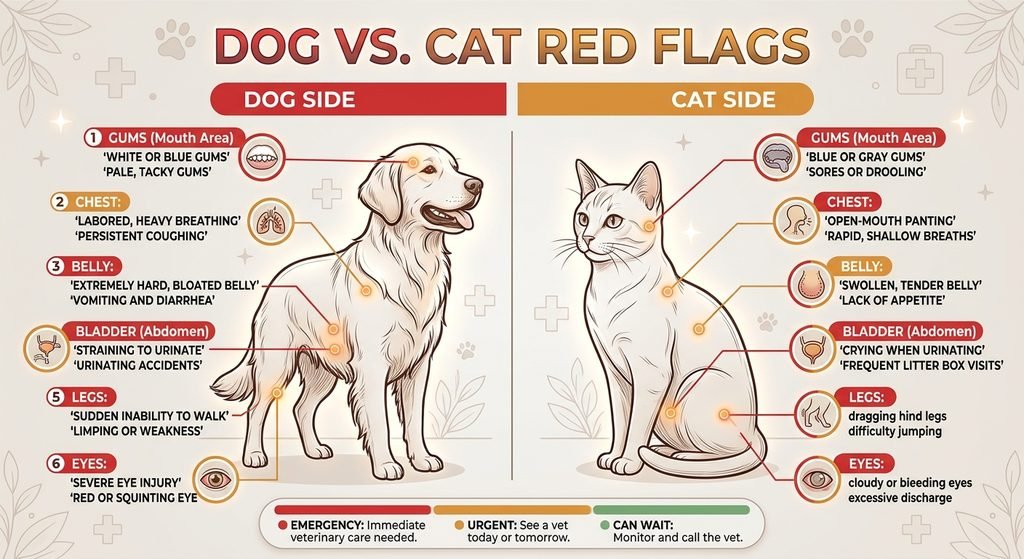
Trouble Breathing or Pale, Blue, or Grey Gums
Laboured breathing is one of the clearest warning signs. Watch for:
- Breathing with the mouth open (especially in cats, which rarely pant)
- Heaving sides, stretched neck, or elbows held out from the chest
- Noisy, raspy, or gasping breaths
- Gums or tongue that look pale, blue, purple, or grey instead of healthy pink
A cat breathing with its mouth open is never “just tired.” It can point to heart failure, fluid around the lungs, or asthma, and it needs to be seen immediately.
Collapse, Sudden Weakness, or Unresponsiveness
A pet that collapses, cannot stand, or does not respond normally to your voice may be in shock, bleeding internally, or dealing with a heart rhythm problem. Even if your pet recovers within a minute, a fainting episode deserves an urgent exam.
Seizures
A single short seizure in a pet with a known seizure condition may be manageable under your vet’s existing plan. The American Veterinary Medical Association advises getting immediate veterinary care if a seizure lasts longer than five minutes, if seizures keep going without stopping, or if your pet has two or more seizures within 24 hours. A first-ever seizure should also be treated as urgent.
Swollen Belly with Unproductive Retching (Bloat)
Gastric dilation and volvulus, often called bloat or GDV, happens when the stomach fills with gas and twists. The Merck Veterinary Manual describes it as an acute, life-threatening condition that mainly affects large and giant breeds and requires immediate medical and surgical treatment. Classic signs include:
- Repeated attempts to vomit with little or nothing coming up
- A tight, enlarged, drum-like abdomen
- Drooling, pacing, and restlessness
- Rapid breathing and pale gums as shock sets in
Great Danes, German Shepherds, Standard Poodles, and other deep-chested dogs are at higher risk, but any dog can bloat. Treatment usually involves stabilization followed by emergency animal surgery to correct the twist.
Straining to Urinate, Especially in Male Cats
A male cat who keeps visiting the litter box but produces little or no urine may have a urethral blockage. The Cornell Feline Health Center calls this an absolute emergency and notes that death can follow a complete obstruction in less than 24 to 48 hours. Crying in the box, licking the genital area, and hiding are common signs. If you have been searching “cat emergency vet near me” because of litter box straining, do not wait until morning.
Suspected Poisoning or Toxic Ingestion
Do not wait for symptoms to appear. Many toxins cause damage hours before the pet looks sick. Common culprits in Canadian homes include:
- Human pain relievers such as ibuprofen, naproxen, and acetaminophen
- Xylitol in sugar-free gum, candy, and some peanut butters
- Grapes, raisins, onions, garlic, and chocolate
- Cannabis edibles
- Rodent bait, antifreeze, and lilies (extremely dangerous for cats)
The ASPCA Animal Poison Control Center keeps an updated list of toxic plants and household products, but your first call should go to a veterinary team that can examine your pet in person.
Trauma, Deep Wounds, or Bleeding That Will Not Stop
Any pet hit by a car, attacked by another animal, or injured in a fall needs an exam, even if it walks away looking fine. Internal bleeding and chest injuries are not always visible. Bleeding that soaks through a pressure bandage within a few minutes is an emergency.
Severe or Bloody Vomiting and Diarrhea
One episode of vomiting in an otherwise bright pet can usually be monitored. Seek urgent care when you see:
- Vomiting more than two or three times in a few hours
- Blood in vomit or stool, or black, tarry stool
- Vomiting along with lethargy, a painful belly, or refusal to drink
- Any vomiting in a puppy, kitten, or senior pet with other health conditions
Other Signs That Need Same-Day Attention
- Sudden lameness or refusing to put weight on a leg
- Eye injuries, a bulging eye, or sudden squinting
- Heatstroke signs after time outdoors: heavy panting, drooling, collapse
- Labour lasting more than an hour of strong contractions without a puppy or kitten delivered
- Not eating for more than 24 hours in a cat, or not drinking at all
Dog vs. Cat: How Emergency Signs Differ
Dogs and cats often show the same illness in very different ways. Cats in particular are masters at hiding distress.
| Warning Sign | What It Often Looks Like in Dogs | What It Often Looks Like in Cats |
|---|---|---|
| Breathing trouble | Heavy panting at rest, coughing, stretched neck | Open-mouth breathing, crouched posture, belly breathing |
| Pain | Whining, restlessness, hunched back, guarding a body part | Hiding, sitting very still, hunched “meatloaf” pose, hissing when touched |
| Urinary emergency | Straining with little output, blood in urine | Repeated litter box trips, crying in the box, licking genitals |
| GI emergency | Retching without vomiting, swollen belly (bloat) | Repeated vomiting, no appetite for 24 hours or more |
| Toxin risk | Chocolate, xylitol, grapes, medications | Lilies, antifreeze, essential oils, dog flea products |
| Shock | Pale gums, weakness, rapid heart rate | Cold ears and paws, very slow responses, collapse |
Emergency, Urgent, or Can It Wait?
Not every worrying symptom calls for the same level of response. Use this as a rough triage guide, and call your vet whenever you are unsure.
| Level | Examples | What to Do |
|---|---|---|
| Emergency: go now | Trouble breathing, collapse, bloat signs, blocked cat, active seizure over 5 minutes, toxin ingestion, major trauma | Call ahead and travel immediately |
| Urgent: same day | Limping, a single seizure that has stopped, mild vomiting with low energy, eye injury, small wounds | Call for a same-day visit |
| Can wait: book a visit | Mild itching, a small lump that has not changed, slight change in appetite with normal energy | Schedule a regular appointment |
If you are still deciding between an urgent care clinic and a full emergency hospital, we explain the pet urgent care vs emergency vet differences in a separate guide.
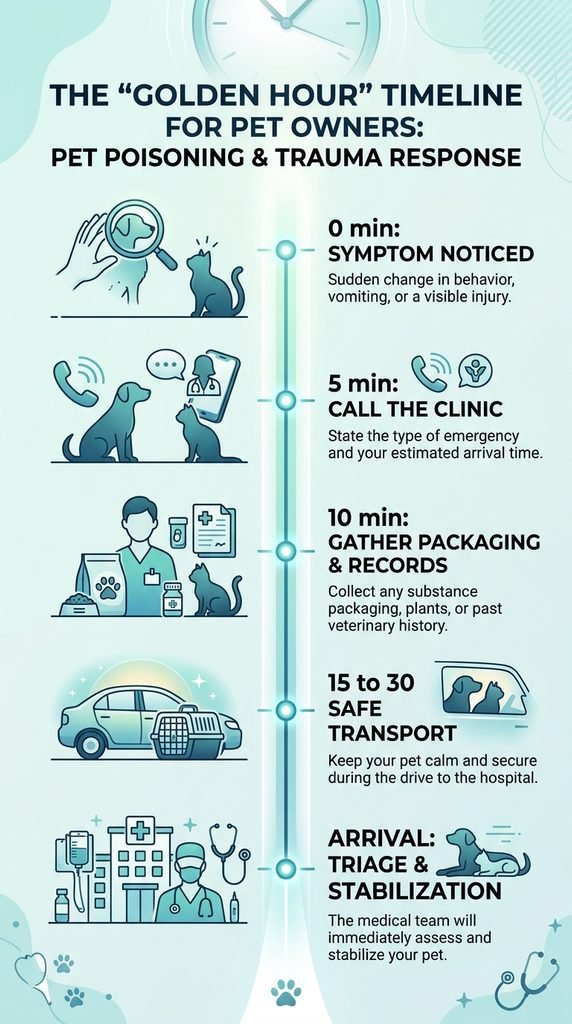
What to Do in the First 10 Minutes
Call Ahead
A quick call lets the team prepare oxygen, IV supplies, or a surgical room before you arrive. Describe the symptoms, when they started, and anything your pet may have eaten.
Bring the Evidence
If you suspect poisoning, bring the packaging, pill bottle, or a photo of the plant. Knowing the exact product and amount changes treatment decisions. Bring a list of your pet’s current medications too.
Transport Safely
- Put cats and small dogs in a carrier with a towel underneath
- Use a blanket or board as a stretcher for large dogs that cannot walk
- Keep injured pets as still as possible and support the spine
- Have a second person drive if you can, so someone can watch the pet
What Not to Do
- Do not give human medications for pain or fever
- Do not induce vomiting unless a veterinarian tells you to
- Do not put your hand in the mouth of a seizing animal
- Do not wait overnight to “see how things go” with any red-flag sign
Even a gentle pet can bite when frightened and hurting. Approach slowly, speak calmly, and protect your face.
What Happens When You Arrive for Pet Emergency Care
Knowing what to expect can take some of the fear out of the visit.
Triage and Stabilization
The team checks breathing, heart rate, gum colour, temperature, and pain level first. Pets with the most critical problems are seen first, which is why a cat with a blocked bladder may go ahead of a dog with a cut paw. Stabilization can include oxygen therapy, IV fluids, and pain relief.
Rapid Diagnostics
Speed matters most here. Clinics with state-of-the-art pet diagnostics on site can run bloodwork and urinalysis within minutes rather than waiting on an outside lab. On-site imaging for pets, including digital X-rays and ultrasound, can confirm bloat, a foreign object, a chest injury, or fluid in the belly during the same visit.
Treatment and Monitoring
Depending on the diagnosis, treatment may include medications, decontamination for toxins, wound care, a urinary catheter, or surgery. Your vet will explain the findings, outline the plan, and talk you through recovery and home care before your pet goes home.
Our emergency vet services cover emergency exams, in-house diagnostics, critical care, emergency surgery, and toxin treatment under one roof, with walk-ins welcome during operating hours.
Case Study: Three Common Emergency Presentations
The scenarios below are composites based on typical presentations seen in veterinary emergency practice. They do not describe any specific patient.
Scenario 1: The large-breed dog after dinner. A deep-chested adult dog eats a large meal, then begins pacing and retching without bringing anything up. Within an hour, the belly looks swollen. Because the owner called ahead, the team had X-ray and IV supplies ready, confirmed GDV, stabilized the dog, and moved to surgery. Early arrival is the single biggest factor in a good outcome for bloat.
Scenario 2: The male cat in the litter box. A young neutered male cat makes repeated trips to the litter box over an evening, producing only drops. The owner assumes constipation and plans to wait until morning. When the cat starts crying and hiding, they come in. Bloodwork shows rising potassium, a dangerous effect of a blocked bladder. A catheter relieves the obstruction and the cat is hospitalized for monitoring.
Scenario 3: The sugar-free gum. A small dog gets into a handbag and eats several pieces of xylitol gum. The dog looks completely normal. The owner brings the wrapper and arrives within 30 minutes. Blood sugar monitoring and supportive care start before signs ever appear, which is exactly the point of acting fast with toxins.
The pattern across all three: owners who acted on the first warning sign gave their pets the widest range of treatment options.
Sick Pet Care at Home: When Watching Is Okay
Good sick pet care does not always mean an emergency trip. If your pet has a single episode of vomiting or soft stool, is still drinking water, has normal gum colour, and remains alert and interested in you, it is often reasonable to:
- Withhold food for a few hours (not water) for adult dogs, then offer a small bland meal
- Keep a simple log of what you see, including times and amounts
- Watch energy, appetite, urination, and breathing closely
- Call your vet the same day if anything gets worse or does not improve within 24 hours
Kittens, puppies, seniors, and pets with diabetes, heart disease, or kidney disease have less reserve. For them, lower your threshold and call sooner.
How to Prepare Before an Emergency Happens
A little planning now saves precious minutes later.
Save the right numbers. Store your regular clinic, the nearest emergency hospital, and a pet poison hotline in your phone. When you are searching for a “pet emergency near me” in the moment, you do not want to scroll through maps.
Know your nearby options. Local guides like our overview of choosing a brampton emergency vet and what to expect from a walk in vet near me are worth reading before you need them.
Build a simple first aid kit. Include gauze, a self-adhesive bandage, a digital thermometer, saline, a soft muzzle, a towel or blanket, and a copy of your pet’s medical records.
Keep records handy. A photo of your pet’s vaccine record and medication list on your phone helps the team move faster.
Pet-proof the obvious risks. Keep medications in closed cabinets, store sugar-free products out of reach, and never bring lilies into a home with cats.
Pet owners across Brampton have given Lacoste Animal Hospital a 4.6-star Google rating across more than 400 reviews, and many of them mention how quickly and calmly the team responded when their pet needed help.
Frequently Asked Questions
-
What are the most common pet emergency symptoms I should never ignore?
The most serious pet emergency symptoms include difficulty breathing, pale or blue gums, collapse, seizures lasting more than five minutes, a swollen belly with unproductive retching, straining to urinate with little output, and known toxin ingestion. Heavy bleeding and major trauma also need immediate care. If your dog or cat shows any of these signs, call a veterinary team and travel right away rather than waiting to see if things improve.
-
How do I find a pet emergency near me in Brampton?
Start by saving the contact details of your regular vet and the closest clinic that offers emergency and urgent care before you ever need them. When searching for a pet emergency near me, look for clinics with in-house diagnostics, on-site surgery, and walk-in emergency access. Always call ahead while you are on the way so the team can prepare oxygen, IV fluids, or imaging for your pet’s arrival.
-
Should I take my cat to an emergency vet for vomiting?
A single episode of vomiting in a cat that is otherwise eating, drinking, and acting normally can usually be monitored at home. If you are searching for a cat emergency vet near me, go right away when vomiting happens repeatedly, contains blood, comes with lethargy or a painful belly, or if your cat has not eaten in more than 24 hours. Cats hide illness well, so persistent vomiting often signals something more serious underneath.
-
What should I bring to an emergency vet visit?
Bring your pet in a secure carrier or on a leash, along with any packaging, pill bottles, or plant samples if you suspect poisoning. A list of current medications, recent vaccine records, and notes on when symptoms started are also very helpful. If your pet vomited, a photo of the vomit can help the team. The more detail you can share, the faster your veterinarian can narrow down the cause.
-
Can I give my pet human pain medication in an emergency?
No. Common human pain relievers such as ibuprofen, naproxen, and acetaminophen can cause stomach ulcers, kidney failure, and liver damage in dogs, and acetaminophen is especially dangerous for cats. Even a small dose can be toxic. Keep your pet calm and comfortable, then call your veterinarian for guidance. Only give medication that has been prescribed specifically for your pet by a veterinarian who has examined them.
-
How is urgent care different from an emergency vet near me?
Urgent care handles problems that need attention the same day but are not immediately life-threatening, such as limping, minor wounds, mild vomiting, or ear infections. When you search for an emergency vet near me, look for a team equipped for critical cases like breathing trouble, bloat, poisoning, and trauma, with oxygen, IV fluids, imaging, and surgery available. Many clinics offer both levels of care, so calling ahead helps the team direct you to the right service.
-
What counts as sick pet care I can manage at home?
Mild, short-lived symptoms in an otherwise alert pet can often be managed at home with rest, fresh water, and close observation. Examples include one episode of soft stool, a single vomit, or a minor scrape. Keep notes on eating, drinking, and energy. If symptoms last more than 24 hours, get worse, or your pet is very young, senior, or has a chronic condition, book a same-day visit instead.
When something feels wrong with your pet, trust that instinct, make the call, and let a veterinary team help you decide the next step.