
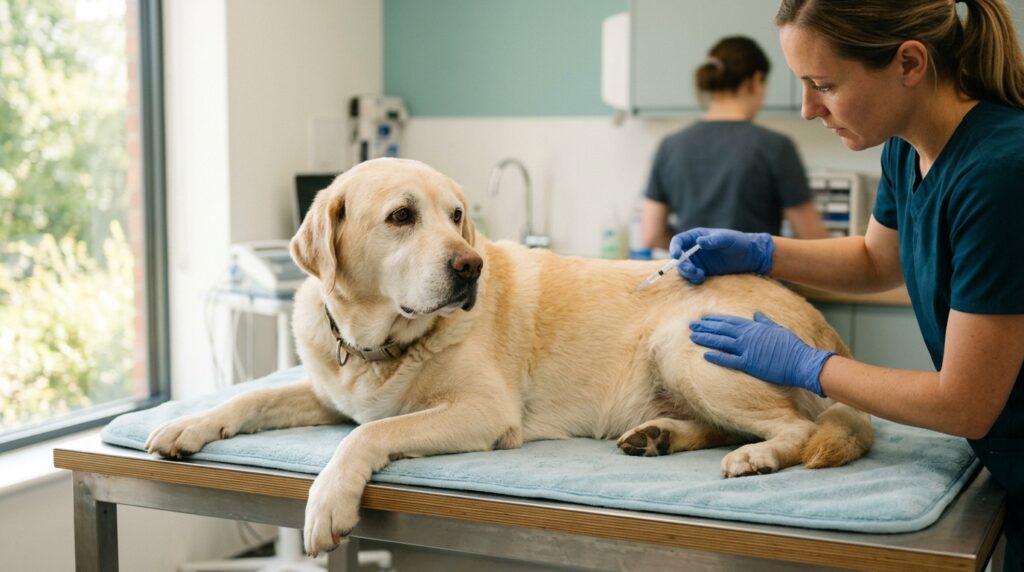
Librela injections for dogs have changed how many veterinarians manage arthritis pain, giving older and stiff dogs a monthly option that works differently from daily pills. If your dog has slowed down on walks, hesitates at the stairs, or struggles to get up after a nap, you may have started searching for a vet near me who can explain whether this treatment makes sense. This guide covers how Librela works, which dogs are good candidates, what the research shows, how it compares with other options, and what a typical treatment plan looks like from the first visit onward.
What Is Librela and How Does It Work?
Librela is the brand name for bedinvetmab, a monoclonal antibody made specifically for dogs. It is approved in Canada to relieve pain associated with osteoarthritis and is given as a small injection under the skin once a month. Your veterinarian calculates the dose from your dog’s body weight.
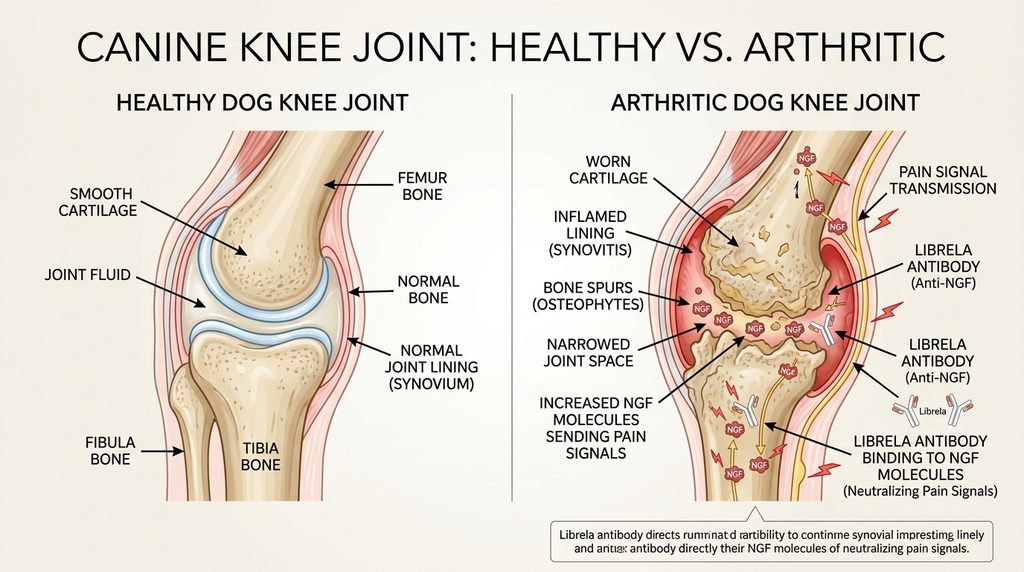
How Librela Targets Nerve Growth Factor
When a joint is damaged by arthritis, the body releases a protein called nerve growth factor (NGF). NGF sensitizes the nerves around the joint, so normal movement feels painful, and it feeds the inflammation that keeps the cycle going. Bedinvetmab binds to NGF and blocks it, which means fewer pain signals reach the brain.
Because it is an antibody rather than a conventional drug, Librela is broken down by the body much like a natural protein. It is not cleared mainly through the liver or kidneys, which is one reason veterinarians consider it for senior dogs with other health concerns.
Where Librela Fits Among Dog Arthritis Treatments
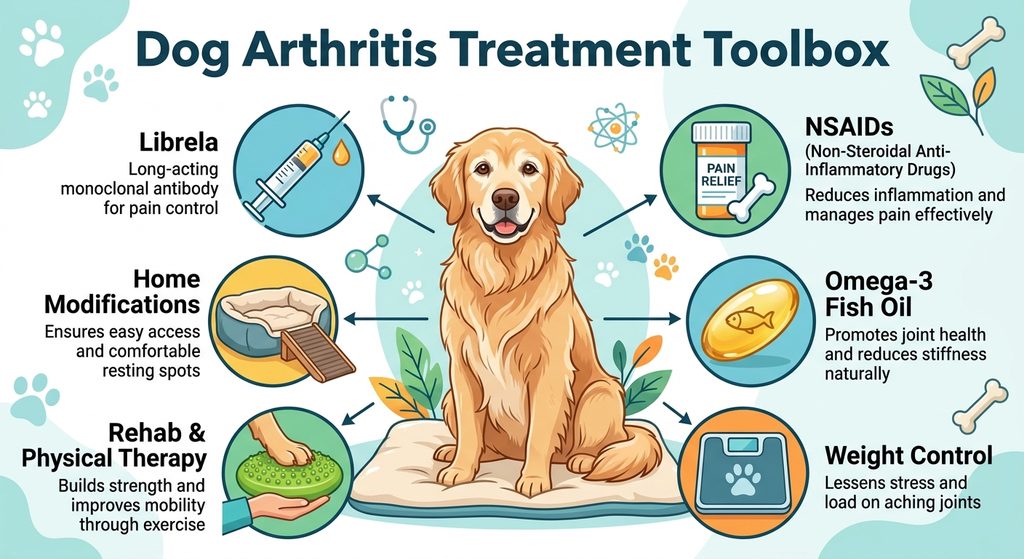
Librela does not cure arthritis or rebuild cartilage. It manages pain. A dog that feels better moves more, and regular movement protects muscle and joint health, so most vets use it as one part of a broader dog arthritis treatment plan.
Understanding Canine Osteoarthritis and Dog Joint Pain
Canine osteoarthritis is a progressive condition in which the cartilage cushioning a joint wears down, the joint lining becomes inflamed, and bony changes develop over time. The Merck Veterinary Manual’s overview of osteoarthritis in dogs describes it as one of the most common causes of chronic pain in dogs. It is often linked to hip or elbow dysplasia, old ligament injuries, obesity, and simple wear from age.
Signs Your Dog May Have Joint Pain
Dogs rarely cry out from chronic pain. Instead, the signs are quiet and easy to blame on “just getting old”:
- Stiffness after rest that improves once they warm up
- Reluctance to jump into the car or onto the couch
- Slower or shorter walks, or lagging behind
- Licking at a wrist, knee, or hip
- Difficulty sitting squarely or lying down slowly in stages
- Irritability when touched near the back or hips
- Muscle loss over the hind legs
How Vets Confirm Canine Osteoarthritis
A diagnosis starts with a hands-on orthopedic exam, where the vet checks each joint for pain, swelling, reduced range of motion, and grinding. From there, in-house digital X-rays show joint spacing, bone spurs, and remodelling, and they help rule out other causes of lameness such as bone tumours or fractures. Access to state-of-the-art pet diagnostics on site means most dogs can be assessed, imaged, and started on a plan in the same visit.
Is Your Dog a Good Candidate for Librela?
Not every dog with joint pain needs Librela, and not every dog can safely receive it.
Dogs That Often Do Well
- Senior dogs with confirmed osteoarthritis pain
- Dogs that had stomach upset or other problems on daily NSAIDs
- Dogs with mild kidney or liver changes where NSAID use needs caution
- Dogs whose owners struggle with daily pills
- Dogs on several medications where a monthly injection simplifies care
When Librela Is Not Recommended
According to the Canadian product label for Librela, the injection should not be used in:
- Dogs under 12 months of age
- Breeding, pregnant, or nursing dogs
- Dogs with a known allergy to bedinvetmab
The label also notes that safety in large-breed dogs between 12 and 18 months has not been evaluated, and there is no long-term safety data on using Librela together with NSAIDs. Your veterinarian will weigh these points before recommending it.
What to Expect: The Librela Treatment Process Step by Step
Before the First Injection
Expect a full physical and orthopedic exam plus baseline bloodwork, sometimes sent for reference laboratory analysis when a broader panel is needed. These results confirm your dog is fit for long-term pain treatment and set a baseline for later comparisons. If the numbers look confusing, our guide on how to read your pet’s blood work results explains what each value means.
The Injection Visit
The injection takes seconds and is given under the loose skin, much like a vaccine. No sedation or fasting is needed.
The First Two Months
Librela reaches a steady level in the body after two doses. Some families notice easier movement within a week or two, while others only see real change after the second injection, so stopping after one dose rarely gives a fair picture.
Long-Term Monthly Care
If your dog responds well, injections continue monthly, with each visit doubling as a quick check of weight, mobility, and comfort.
How Well Does Librela Work? What the Research Shows
The field studies behind Librela’s approval compared it with a placebo injection. “Treatment success” was measured using owner assessments of pain and mobility.
| Study | Dogs Enrolled | Success at Day 28 (Librela vs Placebo) | Peak Success (Librela vs Placebo) |
|---|---|---|---|
| U.S. field study | 272 | 47.4% vs 36.6% | 58.0% vs 41.7% at Day 56 |
| European field study | 287 | 43.5% vs 16.9% | 52.6% vs 21.1% at Day 42 |
| European continuation study (6 months, open label) | 89 | Not applicable | Stayed at or above 62.8%, reaching 82.2% at Day 56 |
Source: Canadian Librela product label.
Results improved after the second dose and kept climbing with longer treatment. By the end of 2024, the manufacturer reported close to 25 million doses distributed worldwide, giving vets a large base of real-world experience.
Librela vs. Other Dog Arthritis Treatments
Most dogs do best with a combination approach. Here is how the main options compare:
| Treatment | How It Works | How Often | Best Suited For | Key Considerations |
|---|---|---|---|---|
| Librela (bedinvetmab) | Blocks nerve growth factor to reduce pain signals | Monthly injection at the clinic | Dogs over 12 months with osteoarthritis pain | Not for breeding, pregnant, or nursing dogs |
| NSAIDs | Reduce inflammation and pain | Daily oral medication | Many dogs with healthy kidneys and liver | Needs bloodwork monitoring, can upset the stomach |
| Adjunct pain medications | Act on nerve pain pathways | Daily oral medication | Dogs needing added pain control | Can cause drowsiness |
| Joint diets and supplements | Support cartilage and reduce inflammation (e.g., omega-3s) | Daily | Early or mild joint pain, long-term support | Effects are gradual and modest |
| Physical rehab and canine osteopathy | Improve strength, flexibility, and range of motion | Weekly sessions or home exercises | Most arthritic dogs as an add-on | Results depend on consistency |
| Surgery | Corrects structural problems like ligament tears | One-time procedure plus recovery | Specific joint injuries or deformities | Requires anesthesia and rehab |
Some Brampton owners add canine osteopathy or physiotherapy, which work best once pain is controlled. When a structural problem is involved, your vet may discuss whether animal surgery or a specialist referral is the better path.
Possible Side Effects and Safety Considerations
Most dogs tolerate Librela well. In the field studies, the most common problems, such as urinary tract and skin infections, appeared at similar rates in placebo dogs.
Reported Side Effects
The Canadian label lists rare reactions (1 to 10 dogs per 10,000) that include increased thirst and urination, lethargy, reduced appetite, vomiting, diarrhea, wobbliness, and urinary incontinence. Very rare reports include seizures, allergic reactions, and immune-mediated blood disorders.
In December 2024, the U.S. regulator issued a Dear Veterinarian letter on adverse events reported in dogs treated with Librela, mainly neurologic signs such as incoordination and weakness. The U.S. label was then updated in 2025 to reflect post-approval experience. Report any change after an injection to your vet.
Signs That Need Urgent Attention
Call your clinic or visit an emergency vet Brampton pet owners trust if your dog shows any of the following after an injection:
- Facial swelling, hives, or trouble breathing
- Collapse, seizures, or severe wobbliness
- Sudden weakness in the back legs
- Vomiting that does not stop or refusal to eat for more than a day
Building a Complete Dog Pain Management Plan
The AAHA pain management guidelines for dogs and cats recommend a multimodal approach, combining several tools so each does less heavy lifting. A solid dog pain management plan usually includes:
- Weight control. Extra kilograms add stress to sore joints.
- Controlled exercise. Short, frequent walks beat one long weekend hike.
- Home changes. Rugs on slippery floors, car ramps, and an orthopedic bed.
- Regular rechecks. Arthritis changes, so the plan should too.
Routine wellness and preventive care visits often catch joint changes before a limp appears. See what happens during a pet wellness exam and the top signs your pet needs preventive care for subtle changes worth flagging.
Case Study: A Senior Labrador Gets Back to Morning Walks
This is a composite example based on typical cases. Details have been changed to protect client privacy.
The patient: A 10-year-old Labrador Retriever with a history of hip dysplasia.
The concern: She had stopped climbing the stairs and needed several tries to stand. A past daily NSAID had caused repeated stomach upset.
The workup: X-rays confirmed moderate osteoarthritis in both hips, and bloodwork showed early kidney changes that made long-term NSAID use less appealing.
The plan: The team recommended Librela injections, a modest weight-loss target, omega-3 support, and short twice-daily walks.
The outcome: Small gains followed the first injection. After the second, she was back on the stairs and asking for her morning walk. At her three-month recheck she had lost weight, gained hip muscle, and her bloodwork was stable.
How Our Brampton Team Approaches Arthritis Care
At Lacoste Animal Hospital, arthritis care starts with a proper diagnosis. Our veterinarians examine every joint, use imaging and lab work where needed, and walk you through each option, including Librela, daily medications, and lifestyle changes. If your dog is showing signs of joint pain, book an appointment and we will help you find the right path forward.
Frequently Asked Questions
-
How long does it take for Librela injections for dogs to work?
Some dogs show better mobility within one to two weeks of the first injection, but many need two monthly doses before the full effect appears. The label notes that Librela reaches a steady level in the body after the second dose. For that reason, veterinarians usually recommend completing at least two injections before deciding whether the treatment is working. Keeping a simple log of walks, stairs, and getting up from rest helps you track progress between visits.
-
How often does my dog need a Librela injection?
Librela is given once a month as a small injection under the skin. The dose is based on your dog’s body weight, so your veterinarian will weigh your dog at each visit and adjust if needed. Monthly visits also give the team a regular chance to check mobility, comfort, weight, and any changes in health. If your dog responds well, treatment usually continues long term, since arthritis is an ongoing condition rather than one that resolves.
-
Can Librela be used with other dog arthritis treatment options?
Yes, Librela is often combined with joint diets, omega-3 supplements, weight management, physiotherapy, and home changes like ramps and rugs. Some dogs also receive additional pain medications. The Canadian label notes there is no long-term safety data on using Librela together with NSAIDs, so your veterinarian will decide case by case whether that combination makes sense. Always tell your vet about every medication and supplement your dog takes before starting treatment.
-
Is Librela safe for senior dogs with kidney problems?
Librela is broken down like a natural protein rather than being cleared mainly through the kidneys or liver, which is why many veterinarians consider it for senior dogs with early kidney changes. That said, every dog is different. Your vet will usually run baseline bloodwork, review your dog’s full history, and monitor results over time. Reported side effects include increased thirst and urination in rare cases, so let your clinic know about any changes you notice at home.
-
What are the most common side effects of Librela?
Most dogs have no noticeable side effects. Rare reports include lethargy, reduced appetite, vomiting, diarrhea, increased thirst or urination, urinary accidents, and wobbliness. Very rare reports include seizures and allergic reactions. If your dog shows facial swelling, trouble breathing, collapse, or sudden weakness after an injection, contact your veterinarian or an emergency clinic right away. Reporting any change, even a small one, helps your vet decide whether to continue the treatment.
-
Can young dogs or pregnant dogs receive Librela?
No. Librela should not be given to dogs under 12 months of age or to dogs that are breeding, pregnant, or nursing. Its safety has also not been evaluated in large-breed dogs between 12 and 18 months old, whose skeletons are still maturing. Young dogs with joint pain usually need a careful workup for developmental problems such as hip or elbow dysplasia, and their treatment plan will look different from a senior dog with osteoarthritis.
-
Where can I find Librela injections near me in Brampton?
Lacoste Animal Hospital in Brampton can assess whether Librela suits your dog as part of a full arthritis workup. If you have been searching for an animal hospital near me that can confirm the diagnosis and guide treatment, our team starts with a physical and orthopedic exam, then uses imaging and lab work where needed. From there, we explain whether Librela, another medication, or a combined plan suits your dog best, and we schedule monthly visits to monitor how your dog responds.
A stiff dog is not just an old dog. With the right diagnosis and a plan that fits, many arthritic dogs get back to the walks, stairs, and couch naps they love.