
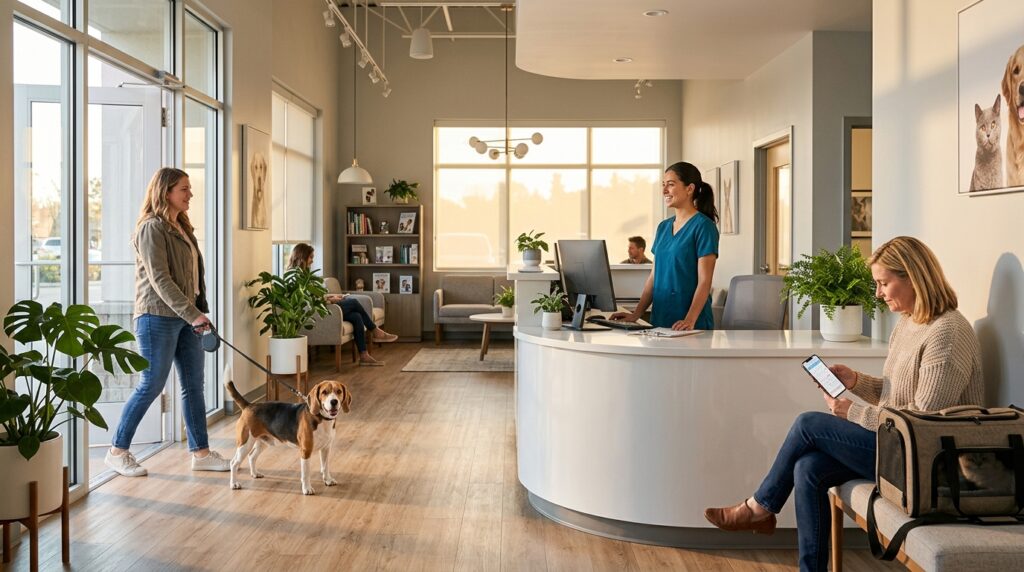
Typing “walk in vet clinic near me” into your phone usually means something has changed with your pet and you want answers today, not next week. Sometimes walking in is exactly the right move. Other times, a booked visit gets your pet better care because the team has time to prepare, run the right tests, and talk things through properly. This guide explains how each option works, where they overlap, which situations suit each one, and how to tell when neither can wait. If you are looking for a walk in vet near me in Brampton, it will also show you what to expect when you arrive at Lacoste Animal Hospital.
What a Walk-In Vet Clinic Actually Offers
A walk-in vet clinic sees pets without a booked time slot. You arrive, a team member checks your pet in, and the veterinarian sees you as soon as they safely can.
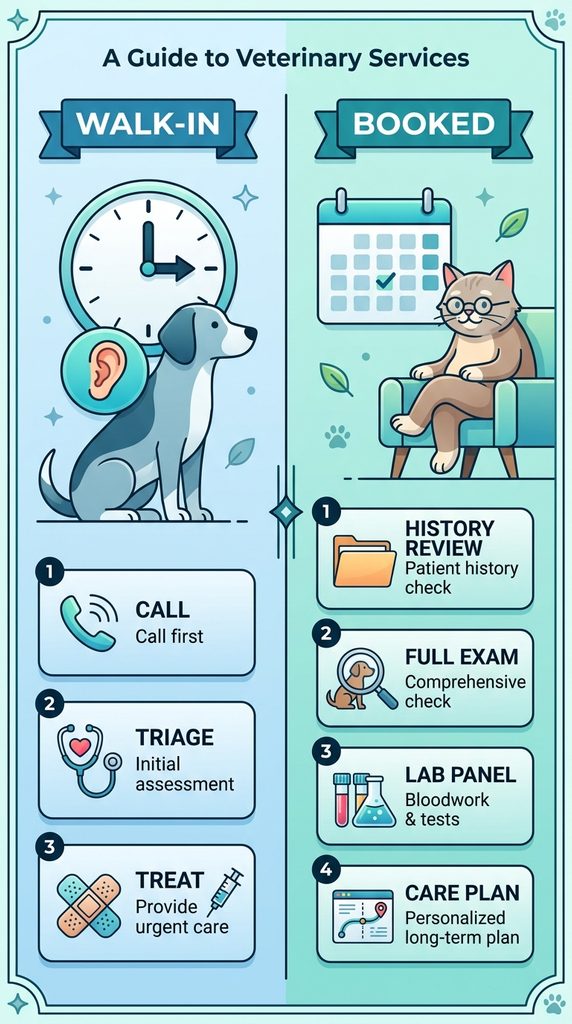
How Walk-In Visits Work
Walk-in care runs on triage, not on a first-come, first-served queue. A pet having trouble breathing is seen before a dog with a mild rash, even if the rash arrived first. That means wait times change from hour to hour. A quiet afternoon can mean a short wait, while a busy evening with several urgent cases can stretch it out.
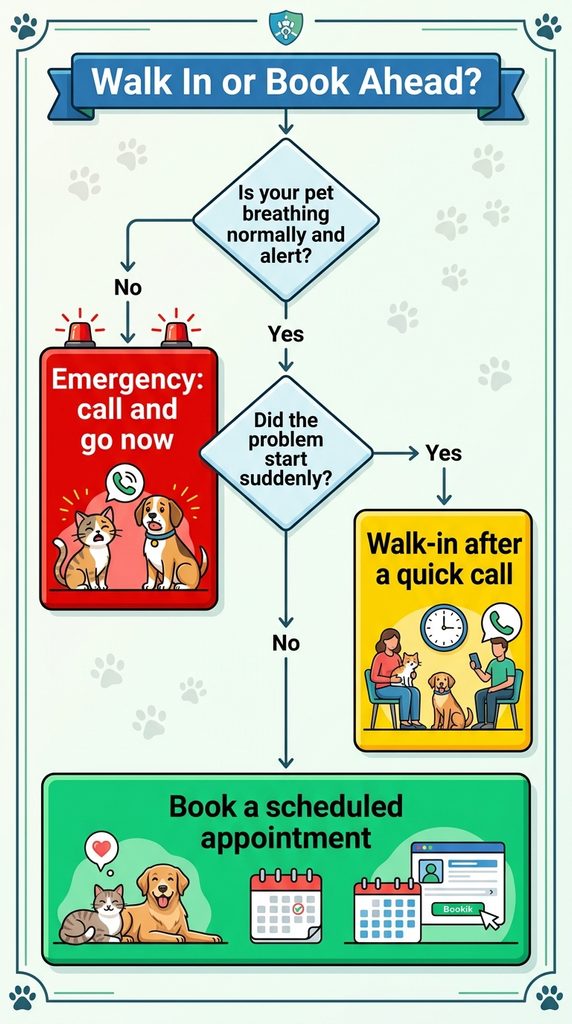
Most clinics that accept walk-ins still prefer a quick phone call before you leave home. The call lets staff ask a few triage questions, warn you about current wait times, and prepare equipment if the problem sounds serious.
Walk-In Clinic vs Urgent Care vs Emergency Hospital
These terms get mixed up a lot. A walk-in clinic is about access: you can come without booking. Urgent care is about severity: problems that need attention within a day but are not life-threatening. Emergency care is for situations where minutes matter. Many general practices handle walk-in urgent visits during their normal hours, while true 24-hour emergency hospitals focus on critical cases around the clock. Our guide on pet urgent care vs emergency vet differences breaks down that decision in more detail.
What a Scheduled Vet Appointment Offers
A scheduled appointment reserves a block of the veterinarian’s time for your pet. That reserved time is the main advantage.
Why Booked Visits Allow More Time
With a booking, the team can review your pet’s history before you arrive, set aside a longer slot for complex concerns, and plan any bloodwork, X-rays, or sample collection in advance. You are also less likely to feel rushed, which makes it easier to ask questions and talk through options.
Services That Work Best by Appointment
Some care simply runs better with planning:
- Annual and senior wellness and preventive care exams
- Vaccine and parasite prevention visits
- Follow-up checks after illness or treatment
- Ongoing management of chronic conditions like arthritis, allergies, or kidney disease
- Behaviour consultations
- Planned procedures such as dental cleanings, spay and neuter, or other pet surgery, which require fasting and pre-anesthetic testing
The AAHA-AVMA canine preventive healthcare guidelines recommend at least yearly exams for healthy adult dogs, with more frequent visits for seniors and pets with ongoing conditions. Those visits are the backbone of good care, and they belong on the calendar rather than squeezed between urgent cases. If you have not been in for a while, here is what to expect at a pet wellness exam.
Walk-In vs Scheduled Appointment: Side-by-Side Comparison
| Factor | Walk-In Visit | Scheduled Appointment |
|---|---|---|
| Best for | Sudden, non-critical problems that should not wait days | Preventive care, follow-ups, chronic conditions, planned procedures |
| Wait time | Varies with triage and caseload | Predictable, seen close to your booked time |
| Visit length | Focused on the immediate problem | Longer, covers multiple concerns |
| Preparation | Team prepares on arrival or after your call | History and tests planned in advance |
| Continuity | You may see whichever vet is available | Easier to see the same vet each time |
| Planned procedures | Not possible on the spot | Fasting and pre-op testing arranged ahead |
| Flexibility | High, no booking needed | Depends on available slots |
When a Walk-In Visit Makes Sense
Walk in, ideally after a quick call, when your pet has a new problem that is uncomfortable or worsening but not life-threatening:
- Vomiting or diarrhea that has happened a few times but your pet is still alert and drinking
- Sudden limping where your pet still puts some weight on the leg
- Ear pain, head shaking, or a bad smell from the ears
- Red, swollen, or squinting eyes
- Hot spots, hives, or itchy skin that flared up quickly
- Minor cuts or wounds that are not bleeding heavily
- Straining to urinate in a female dog or cat (a male cat straining is an emergency)
- Not eating for a day in an otherwise stable adult pet
When to Book a Scheduled Appointment Instead
Book ahead when the concern has been building slowly or needs a full workup:
- Gradual weight loss or gain over weeks or months
- Increased thirst or urination that you have noticed for a while
- Lumps that have been present and are not changing quickly
- Behaviour changes like new anxiety or house soiling
- Senior pet checkups, which benefit from the AAHA life stage checklist approach
- Second opinions where records need to be reviewed first
When Neither Can Wait: Signs of a True Emergency
Some situations should never sit in a booking queue or a walk-in waiting room without warning the team first. The AAHA guide Help! Is This a Pet Emergency? lists signs that need immediate care. Call ahead and go straight in if your pet has:
- Difficulty breathing or blue or pale gums
- Collapse, seizures, or sudden weakness
- A swollen, tight belly with unproductive retching
- A male cat straining with little or no urine
- Heavy bleeding or major trauma
- Known or suspected poisoning
If you suspect poisoning, the ASPCA Animal Poison Control Center can help identify toxic substances, but do not let a phone call delay getting your pet seen. For more on how local emergency visits work, read our article on finding an emergency vet Brampton families can rely on.
What Brampton Pet Owners Search For, and What They Usually Need
Looking at the search phrases people used to find our website this year, a clear pattern shows up. Owners rarely search for a type of care. They search for availability.
| What People Search | What It Usually Signals | Best Fit |
|---|---|---|
| “walk in vet near me”, “vet clinic walk in” | A new problem and no booked visit | Walk-in after a quick call |
| “vet open near me”, “vets open today” | Urgency plus uncertainty about availability | Call first to check wait times |
| “urgent care vet”, “urgent pet care” | Something feels wrong but stable | Same-day or walk-in visit |
| “emergency vet open now” | Possible critical problem | Call ahead and go immediately |
| “online vet appointment” | Planned, non-urgent need | Scheduled appointment |
The takeaway is simple. The phrase you type matters less than your pet’s condition. A two-minute call usually answers the question faster than any search result.
How to Prepare for a Walk-In Vet Visit
A little preparation makes a walk-in visit faster and more useful:
- Call ahead so the team can triage and prepare
- Bring medications and supplements your pet takes, or photos of the labels
- Note the timeline, including when signs started and anything your pet may have eaten
- Bring a sample if vomiting or diarrhea is involved, or take a photo
- Use a leash or carrier, since waiting rooms can be busy
- Bring previous records if you are a new client
How Lacoste Animal Hospital Handles Walk-Ins and Appointments
Walk-In Visits for Urgent Concerns
Our team accepts walk-ins for urgent problems during operating hours, and we always recommend calling ahead so we can prepare for your arrival. Pets are seen based on how serious their condition is. Owners searching for “Lacoste walk in clinic” will find our urgent care vet page lists the conditions we commonly see on a same-day basis. Because we have state-of-the-art pet diagnostics on site, many walk-in patients can be examined, tested, and treated in one visit.
Scheduled Care and Same-Day Requests
For wellness exams, follow-ups, and planned procedures, booked visits give your pet the time and preparation they deserve. We accommodate same-day requests whenever possible. You can book an appointment online or call during operating hours. For current hours, check our website header or Google Business Profile, since they can change through the year.
Case Studies: Two Visits, Two Different Paths
These are composite examples based on typical cases. Details have been changed to protect client privacy.
Case 1: The walk-in that made sense. A 4-year-old Shih Tzu started shaking his head and scratching one ear the evening after a swim. His owner called, described the signs, and walked in. An ear swab examined in-house showed yeast and bacteria, and he went home the same visit with medication and cleaning instructions. A recheck was booked for two weeks later. Our guide to dog ear infection signs explains why prompt care matters.
Case 2: The booked visit that found more. A 12-year-old cat had been losing weight slowly and drinking more. Her owner nearly walked in, but our team suggested a longer scheduled appointment. That slot allowed a full exam, blood pressure check, and a complete lab panel. The results pointed to an overactive thyroid, and the family left with a clear treatment and monitoring plan instead of a rushed partial answer.
Frequently Asked Questions
-
How do I find a walk in vet clinic near me that is open now?
Start by searching for clinics near you, then call the closest one before leaving home. A quick call confirms whether they are seeing walk-ins, how long the current wait is, and whether your pet’s signs suggest going to an emergency hospital instead. Hours shown online are not always current, so a call or a check of the clinic’s Google Business Profile is the most reliable way to know who can see your pet right now.
-
How do animal hospitals manage appointments versus walk-in care?
Most animal hospitals run both side by side. Booked appointments fill planned time slots, while walk-ins are triaged as they arrive and fitted in based on how urgent they are. A pet in distress is always seen first, which can push routine appointments back. Calling ahead helps the team plan staff, exam rooms, and equipment, so walk-in patients are seen faster and scheduled clients experience fewer delays during busy periods.
-
How long is the wait at a walk-in vet?
There is no fixed wait at a walk-in vet because cases are seen by severity, not arrival order. On a quiet day you may be seen quickly, while a busy period with several urgent patients can mean a longer wait. Calling first is the best way to get a realistic estimate. If your pet’s condition gets worse while you wait, tell the front desk right away so the team can reassess.
-
Can I walk in for vaccines or a routine checkup?
Some clinics will fit in routine care when the schedule allows, but vaccines and wellness exams are best booked. A scheduled visit gives the veterinarian time to review history, check weight and body condition, discuss parasite prevention, and answer your questions without being interrupted by urgent cases. Walk-in capacity is usually kept for pets with new or worsening problems, so booking routine care also helps sick pets get seen faster.
-
What is the difference between a walk in vet and an emergency vet?
A walk in vet is about access: you can arrive without a booking, usually during the clinic’s regular hours, and urgent but stable problems are handled the same day. An emergency vet focuses on critical, life-threatening cases and often operates around the clock. If your pet is struggling to breathe, collapsing, bleeding heavily, or may have been poisoned, go to the nearest emergency-capable hospital and call on the way.
-
Does Lacoste Animal Hospital accept walk-ins?
Yes. Lacoste Animal Hospital in Brampton accepts walk-ins for urgent concerns during operating hours. Pets are triaged on arrival, so the most serious cases are seen first. We recommend calling before you come in so our team can prepare and give you an idea of current wait times. For wellness visits, follow-ups, and planned procedures, booking an appointment ensures your pet gets the full time and attention they need.
-
Is there a walk in animal hospital near me for cats?
Most general animal hospitals that accept walk-ins see both cats and dogs. Cats often hide illness, so changes like hiding, not eating, vomiting, or straining in the litter box deserve prompt attention. A male cat straining to urinate is an emergency and should be seen immediately. Bring your cat in a secure carrier, cover it with a towel to reduce stress, and call ahead so the team can prepare a quiet space.
The best visit is the one that matches your pet’s needs. When in doubt, pick up the phone first. A two-minute call is often the fastest route to the right care.